CDT’s Tech Talk is a podcast where we dish on tech and Internet policy, while also explaining what these policies mean to our daily lives. You can find Tech Talk on SoundCloud and on iTunes.
What’s the key to peace in the world? That’s a question humanity has been trying to answer since the dawn of civilization. Many have tried to find peace through diplomacy and others through military might. Steven Koltai, our guest on this episode of Tech Talk, has a more novel answer to the question – entrepreneurship.
In his new book, “Peace Through Entrepreneurship”, Steven explains why he believe entrepreneurship should be elevated as a foreign policy tool, arguing that it is a uniquely American export that can help address the underlying issues of conflict today – the lack of jobs.
On September 15, 2026, the Center for Democracy & Technology and Electronic Frontier Foundation filed an amicus brief along with the Wikimedia Foundation in Meta Platforms v. Bonta, challenging California’s SB 976.
Not All Guardrails Are Created Equal: Comparing Content Safety and Copyright Filtering
As courts and policymakers work through questions about chatbot liability, they should be wary of analogies that flatten meaningful technical differences. Copyright filtering and safety intervention share real challenges around ambiguity and evasion, but they diverge in what each control must assess, how each manifests over the course of a conversation, and how much can be verified from the outside.
CDT-led Coalition Calls for Transparency for White House AI Framework
CDT and Americans for Responsible Innovation led a broad, bipartisan coalition of over two dozen civil society groups in calling on the White House to release its Framework for review of frontier AI models.
CDT Amicus Brief Calls on Fourth Circuit to Rein In Geofence Warrants
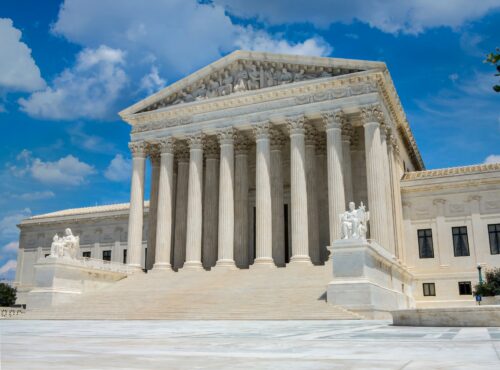
Earlier this year the Supreme Court ruled in Chatrie v United States that the Fourth Amendment protected all cell phone location information, which CDT lauded as a landmark decision, but sent the case back down to the Fourth Circuit to assess the propriety of the geofence warrant at issue.