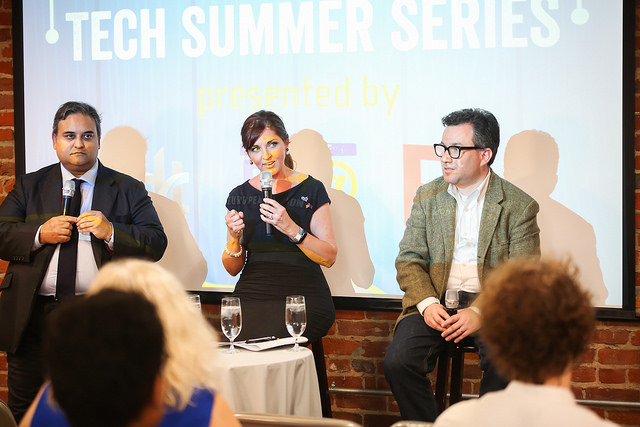
Digital technology is having a profound impact on democratic societies worldwide. Addressing issues around privacy, cybersecurity, and online speech, and disinformation is essential to advancement of fundamental democratic rights in the digital age. And of course, you can’t address these issues if you don’t talk about them – and do so across partisan lines and oceans.
Our second event in the series took place this week and featured MEP Claude Moraes, the Chair of the European Parliament Committee on Civil Liberties, Justice and Home Affairs, CDT President Nuala O’Connor, and R Street President Eli Lehrer. This dynamic trio had a fascinating conversation that covered election security, the role of platforms in combatting disinformation, the GDPR, and much more.
Watch the great conversation below. We hope to see you at the final Summer Series event on August 23 when we will explore the future of work – more details soon!
Op-Ed: France’s Constitutional Council Ruling Tests the Limits of Social Media Bans
Read our analysis the legal and policy significance of the Constitutional Council’s decision on ongoing social media age restriction and age assurance debates ahead of the most-anticipated EU-wide approach on child online safety due by December 2026.
British Public Oppose Secret Surveillance Powers and Want Strong Protections for Encrypted Communications
CDT released nationally representative polling data revealing that a the British public are broadly concerned about the security, privacy, and free speech consequences of allowing law enforcement to access encrypted communications.
As Brussels starts emptying for the summer, the risks of frontier AI models continue to capture the attention of policymakers as a key chapter of the AI Act becomes enforceable, and disclosure rules around the use of AI systems and AI-generated content are further clarified.
CDT Europe’s Feedback on the Draft Guidelines for the Classification of High-Risk AI Systems under the AI Act
CDT Europe responded to the European Commission’s consultation on the draft guidelines for the classification of high-risk artificial intelligence systems.