CDT Files Amicus Brief in Meta Platforms v. Bonta
On September 15, 2026, the Center for Democracy & Technology and Electronic Frontier Foundation filed an amicus brief along with the Wikimedia Foundation in Meta Platforms v. Bonta, challenging California’s SB 976.
Coalition Urges Senate Not to Let Companies Waive Financial Regulations for AI
CDT joined AI Now Institute, American Civil Liberties Union, and several organizations dedicated to tech policy, consumer protection, and civil rights in a letter to Senate leadership and the Senate Banking, Housing, and Urban Affairs Committee opposing the “AI Innovation Labs” language in Sec. 10509 of the CLARITY Act.
Proposals for Third-Party AI Assessment in 2026
As concern about risks and harms related to AI systems continue to grow, a growing chorus of policymakers, industry leaders, and advocates have called for independent AI assessments. This explainer provides an overview of recent proposals for third-party assessment in the United States, including state and federal legislation, executive actions, and industry proposals.
Getting Third-Party AI Assessment Right
Having third parties assess AI systems might seem like common sense, but crafting effective policies toward this goal can be devilishly tricky. A poorly-constructed ecosystem for third-party assessment could easily fail to consider the most consequential mechanisms of risk, neglect the AI harms that most impact people, or do more to protect AI companies than people.

Latest
197 Results
CDT Original Research Examines Privacy Implications of School-Issued Devices and Student Activity Monitoring Software
Student Activity Monitoring Software: Research Insights and Recommendations
Report – Online and Observed: Student Privacy Implications of School-Issued Devices and Student Activity Monitoring Software
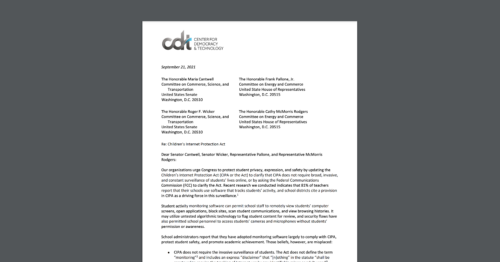
CDT and Coalition of Education and Civil Rights Advocates Urge Congress to Protect Student Privacy
Protecting Student Privacy and Ensuring Equitable Algorithmic Systems in Education
Cybersecurity Best Practices Can Help School Staff Safeguard Student Data
CDT Tech Tales: How Boulder Valley School District Effectively Engages Its Community
Going Beyond Legal Requirements for Community Engagement on Student Privacy
CDT Comments to US Dept. of Education Urging the Protection of Students of Color and Students with Disabilities, And Their Data
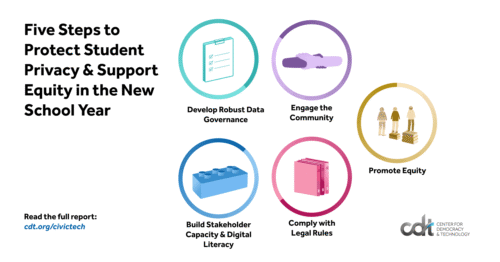
Steps to Protect Student Privacy & Support Equity in the New School Year
CDT Comments on Protecting Privacy Rights and Ensuring Equitable Algorithmic Systems for Transgender and Gender Non-Conforming Students
CDT Staff to Tackle Hottest Issues in Tech at RightsCon 2021
CDT Tech Tales: Centering Student Well-Being in School Technology Decisions
Issue Brief: Closing the Homework Gap While Protecting Student Privacy