


Reining in DOGE and Executive Overreach
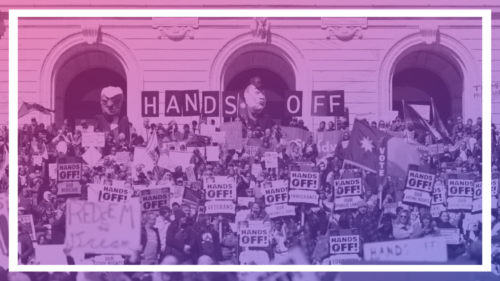
Responding to 2025’s rapid, dramatic changes to the federal government, many of which had technology at the heart, CDT emphasized the range of harms to individual privacy, government oversight, civil rights protections, election security, and free speech.

Tackling AI From Every Angle
As AI tools have become more powerful and ubiquitous, we’re deeply invested in tackling AI from all angles — engaging with leading AI labs, educating lawmakers and regulators, and helping state and local governments adopt AI systems safely and effectively.

Protecting Rights in Europe
As landmark EU digital legislation has moved decisively from adoption to implementation, CDT Europe has continued to raise its profile as a trusted civil society coordinator and expert voice for human rights.

Safeguarding the Midterms
CDT is blending rigorous research, direct engagement, and strategic advocacy to tackle emerging challenges across American elections — which include dramatic cuts to federal support for election security, the rapid emergence of generative AI, and politicized efforts to undermine trust in election outcomes.
CDT's 2025 Highlights
Tech Prom
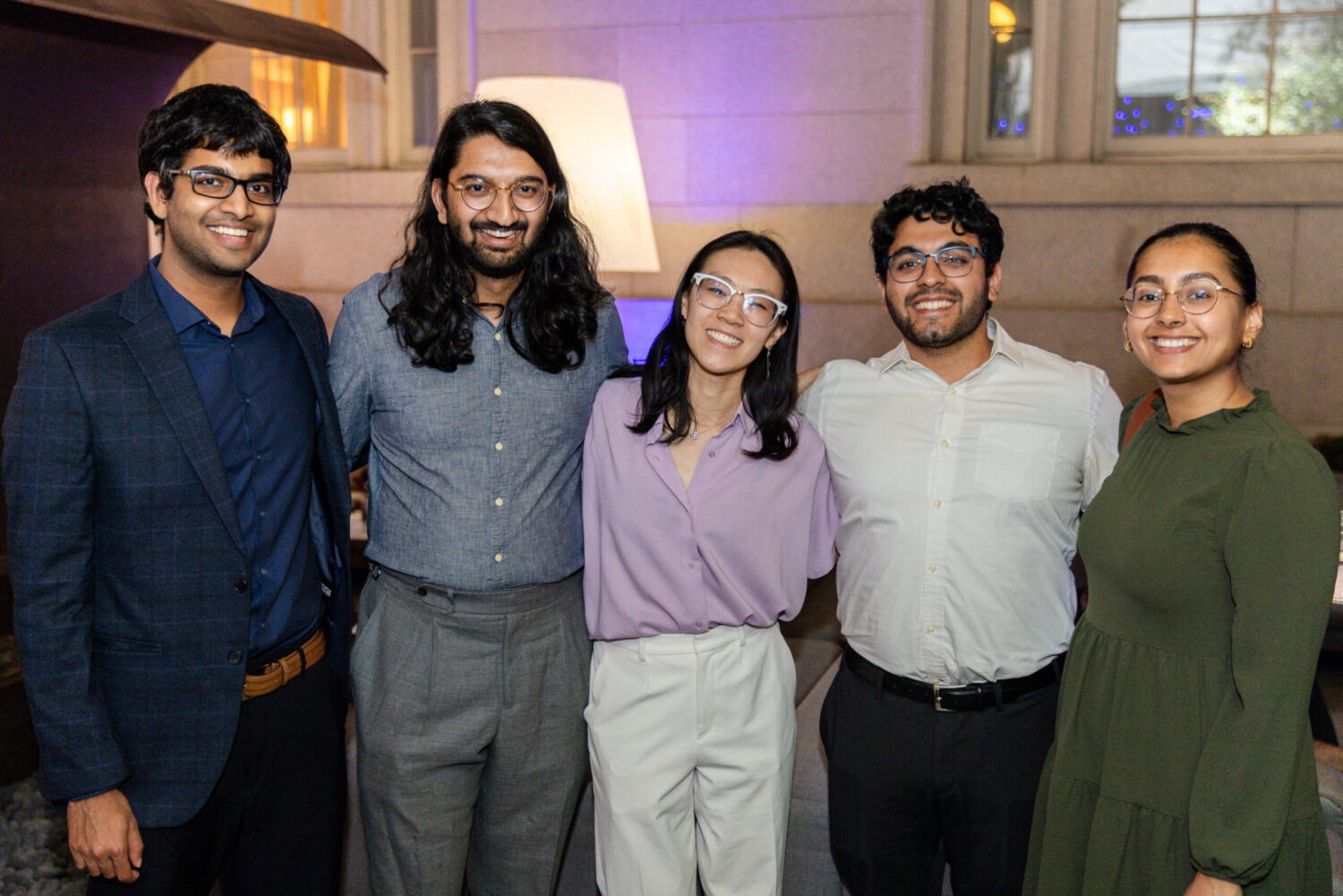
Tech Prom 2025 marked a significant milestone for CDT as we celebrated our 30th anniversary alongside 750 leaders from government, industry, civil society, academia, media, and the research community. Held at The LINE DC, the evening brought CDT’s community together at a pivotal moment for democracy and technology.
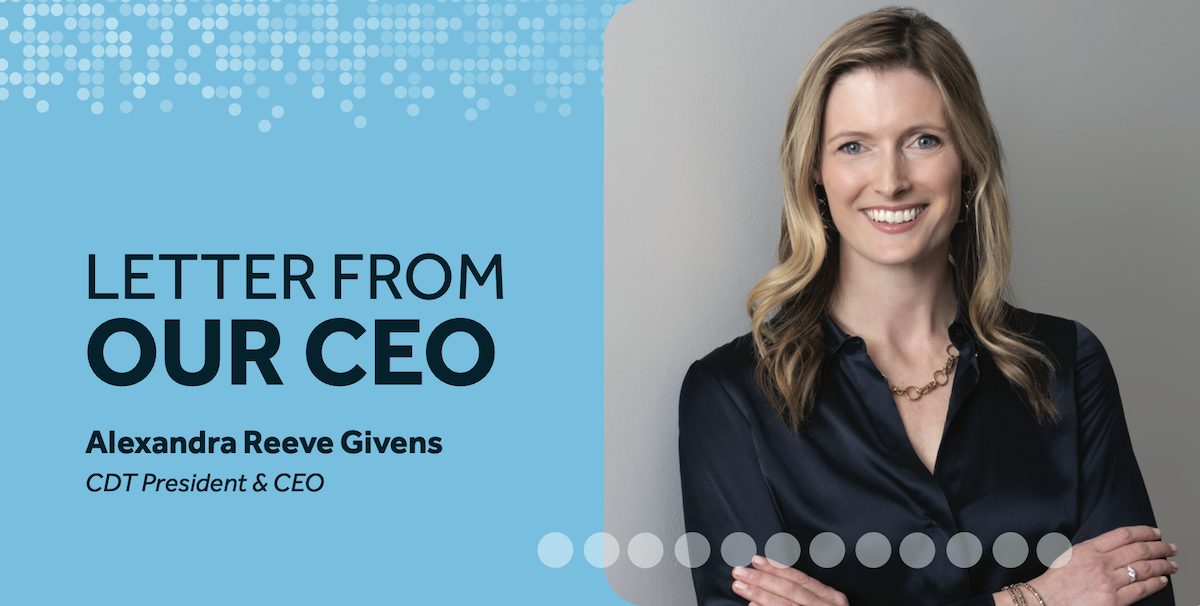
In her remarks, President & CEO Alexandra Reeve Givens reflected on CDT’s founding purpose and enduring mission. Thirty years ago, CDT’s founders chose a name that emphasized not only privacy, free expression, and civil liberties, but the democratic values those principles serve. As Alex noted, that mission is more urgent than ever amid rapid technological change and growing threats to democratic institutions— from government overreach and attacks on free expression, to the expanding use of surveillance and data-driven systems. She highlighted CDT’s leadership across AI governance, trust and safety, privacy, election security, and emerging technologies, emphasizing the real-world impact of this work on people’s rights and daily lives.
For the third year in a row, Tech Prom also elevated artists as essential contributors to tech policy conversations. The 2025 Tech Prom Artist Exhibition featured a one-night-only installation exploring the impact of data and algorithmic systems. In collaboration with Georgetown University, CDT presented A.I. in Art: Perceptions, Values, & Rights, a student-driven exhibition showcasing more than 150 physical and digital works.
This year, CDT also brought our podcast, Tech Talks, to Tech Prom, recording live, on the ground interviews with policymakers, advocates, technologists, and researchers. These conversations captured candid reflections on some of the most pressing challenges and emerging opportunities shaping tech policy.
Together, Tech Prom 2025 honored three decades of CDT’s impact while looking ahead to the work still to come.











Spring Fling
CDT hosted Spring Fling 2025 in conjunction with the International Association of Privacy Professionals’ Global Privacy Summit, convening privacy and AI leaders from government, industry, and civil society. Held on April 22 at Dirty Habit in Washington, D.C., the event welcomed hundreds of attendees, including international and out-of-town guests, during one of the privacy and AI governance field’s most important global gatherings. Spring Fling has become a signature CDT convening, providing space for informal connection and cross-sector dialogue on emerging issues in privacy and AI.