Coalition Urges Senate Not to Let Companies Waive Financial Regulations for AI
CDT joined AI Now Institute, American Civil Liberties Union, and several organizations dedicated to tech policy, consumer protection, and civil rights in a letter to Senate leadership and the Senate Banking, Housing, and Urban Affairs Committee opposing the “AI Innovation Labs” language in Sec. 10509 of the CLARITY Act.
As concern about risks and harms related to AI systems continue to grow, a growing chorus of policymakers, industry leaders, and advocates have called for independent AI assessments. This explainer provides an overview of recent proposals for third-party assessment in the United States, including state and federal legislation, executive actions, and industry proposals.
Having third parties assess AI systems might seem like common sense, but crafting effective policies toward this goal can be devilishly tricky. A poorly-constructed ecosystem for third-party assessment could easily fail to consider the most consequential mechanisms of risk, neglect the AI harms that most impact people, or do more to protect AI companies than people.
Not All Guardrails Are Created Equal: Comparing Content Safety and Copyright Filtering
As courts and policymakers work through questions about chatbot liability, they should be wary of analogies that flatten meaningful technical differences. Copyright filtering and safety intervention share real challenges around ambiguity and evasion, but they diverge in what each control must assess, how each manifests over the course of a conversation, and how much can be verified from the outside.
May was a defining month for EU AI governance, as the European Parliament and Council reached agreement on the AI Omnibus ahead of key AI Act obligations taking effect. Alongside the deal, the European Commission advanced implementation efforts with new draft guidance on high-risk AI systems and transparency obligations, while debates around AI security, copyright and competition continued to intensify across Europe.
CDT VP Testifies on State and Local Cybersecurity Threats and the Federal Retreat
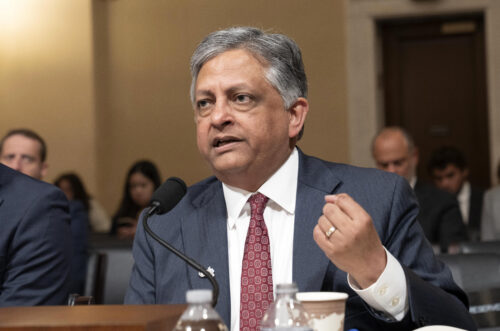
On May 21, 2026, CDT Vice President of Policy Samir Jain testified before the U.S. House of Representatives Committee on Homeland Security’s Subcommittee on Cybersecurity and Infrastructure Protection on the cybersecurity threats facing state and local governments.
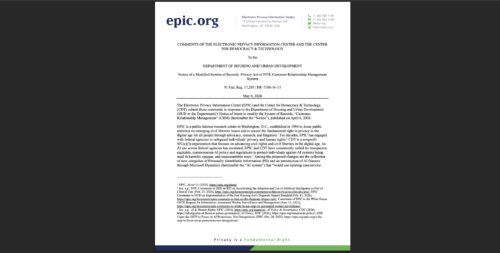
CDT and EPIC Submit Comments Regarding the Department of Housing and Urban Development’s Attempt to Expand Data Collection and AI Use in Key Departmental System
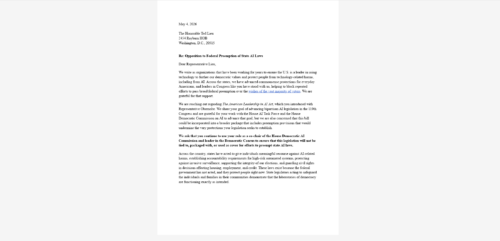
CDT Joined a Letter to Representative Ted Lieu Urging Him to Ensure his Recent, Bipartisan American Leadership in AI Act is Not Tied to Broader Attempts to Preempt State AI Laws
Op-ed: Voter Registration Database Protections Are Resilient
There is no evidence that the systems states use for voter registration databases were corrupted in any prior election, including in 2020, and states have only strengthened security and their processes to ensure the accuracy of voter rolls since.
CDT and Cornell Global AI Initiative Call for Meaningful Advancements and Investment into Linguistic Diversity at the First UN Global Dialogue on AI Governance