Technology increasingly drives immigration enforcement, and it is becoming increasingly intrusive. Warrantless border searches of the cell phones and laptops of both U.S. citizens and non-citizens are growing in number and in sophistication.
Related Topics
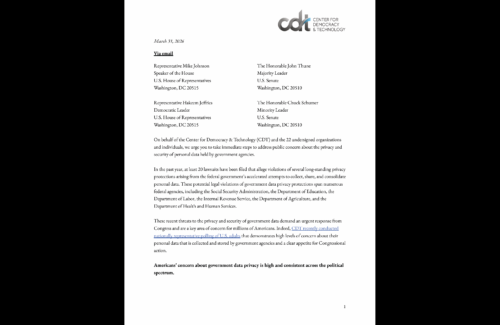
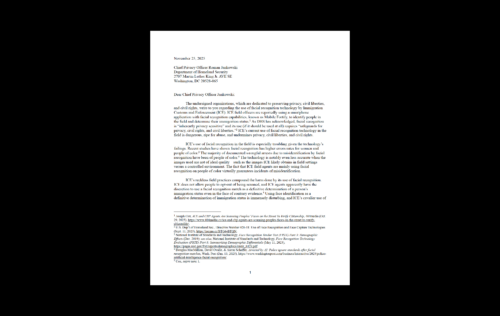
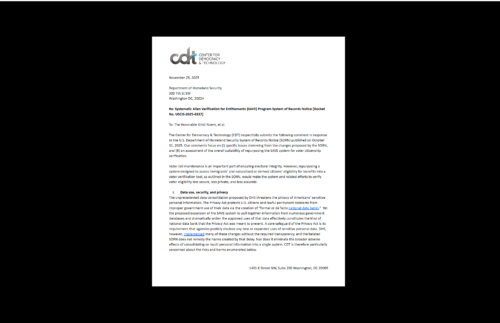
The immigration crackdown in the U.S. features technology as varied as facial recognition, drones and fixed cameras and sensor devices at the border, license plate readers on highways, and social media monitoring to identify among the non-citizen population those who disagree with U.S. policy and can be targeted for removal or denial of immigration benefits. In addition, data that has been collected for one purpose — such as income tax compliance — is being re-purposed for immigration enforcement in contravention of the privacy and data protection rights of the people to whom the data pertains. Non-citizens fearful of removal are particularly vulnerable to abusive measures.
CDT advocates for the responsible use of technology and of data in immigration enforcement and in other law enforcement contexts.
At the same time, the U.S. government claims the power to search the contents of cell phones, computers and other digital devices that travelers possess at the U.S. border. In the government’s view, the border is nearly a rights-free zone, where very sensitive information can be collected from these devices without a warrant and, for most border searches, without any suspicion whatsoever. CDT believes that travelers at the border have full Fourth Amendment rights and that warrantless searches of their digital devices are unconstitutional.