Coalition Urges Senate Not to Let Companies Waive Financial Regulations for AI
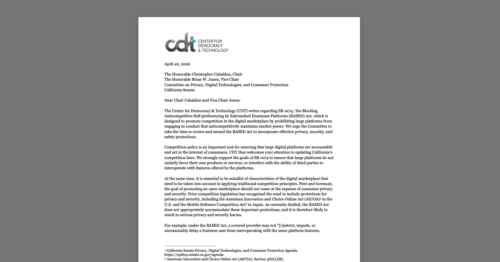
CDT joined AI Now Institute, American Civil Liberties Union, and several organizations dedicated to tech policy, consumer protection, and civil rights in a letter to Senate leadership and the Senate Banking, Housing, and Urban Affairs Committee opposing the “AI Innovation Labs” language in Sec. 10509 of the CLARITY Act.
As concern about risks and harms related to AI systems continue to grow, a growing chorus of policymakers, industry leaders, and advocates have called for independent AI assessments. This explainer provides an overview of recent proposals for third-party assessment in the United States, including state and federal legislation, executive actions, and industry proposals.
Having third parties assess AI systems might seem like common sense, but crafting effective policies toward this goal can be devilishly tricky. A poorly-constructed ecosystem for third-party assessment could easily fail to consider the most consequential mechanisms of risk, neglect the AI harms that most impact people, or do more to protect AI companies than people.
Not All Guardrails Are Created Equal: Comparing Content Safety and Copyright Filtering
As courts and policymakers work through questions about chatbot liability, they should be wary of analogies that flatten meaningful technical differences. Copyright filtering and safety intervention share real challenges around ambiguity and evasion, but they diverge in what each control must assess, how each manifests over the course of a conversation, and how much can be verified from the outside.
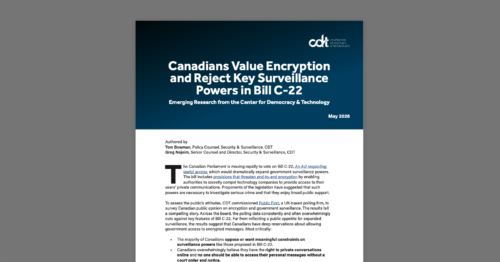
British Public Oppose Secret Surveillance Powers and Want Strong Protections for Encrypted Communications
CDT released nationally representative polling data revealing that a the British public are broadly concerned about the security, privacy, and free speech consequences of allowing law enforcement to access encrypted communications.
Changing Course to Get It Right: The Advisory Committee Reviews Its AI Evidence Rule
CDT is keeping a close eye on Proposed Federal Rule of Evidence 707, which would govern when AI-generated information can be admitted as evidence in federal court — and many state courts where the federal rules are routinely adopted — without a human expert to explain it.
Absent meaningful guardrails, ALPRs — which can effortlessly reconstruct where a person lives, works, shops, socializes, seeks medical care, and more — can be weaponized for pervasive surveillance and misconduct
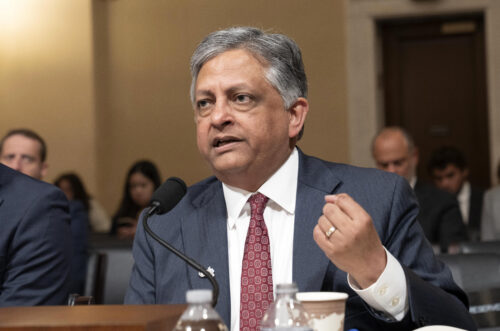
CDT VP Testifies on State and Local Cybersecurity Threats and the Federal Retreat
On May 21, 2026, CDT Vice President of Policy Samir Jain testified before the U.S. House of Representatives Committee on Homeland Security’s Subcommittee on Cybersecurity and Infrastructure Protection on the cybersecurity threats facing state and local governments.