Coalition Urges Senate Not to Let Companies Waive Financial Regulations for AI
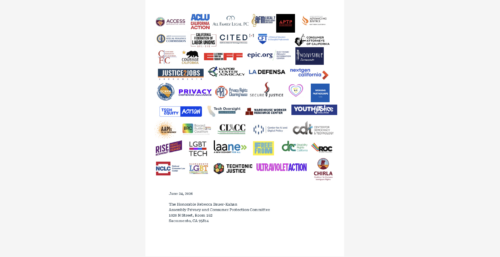
CDT joined AI Now Institute, American Civil Liberties Union, and several organizations dedicated to tech policy, consumer protection, and civil rights in a letter to Senate leadership and the Senate Banking, Housing, and Urban Affairs Committee opposing the “AI Innovation Labs” language in Sec. 10509 of the CLARITY Act.
As concern about risks and harms related to AI systems continue to grow, a growing chorus of policymakers, industry leaders, and advocates have called for independent AI assessments. This explainer provides an overview of recent proposals for third-party assessment in the United States, including state and federal legislation, executive actions, and industry proposals.
Having third parties assess AI systems might seem like common sense, but crafting effective policies toward this goal can be devilishly tricky. A poorly-constructed ecosystem for third-party assessment could easily fail to consider the most consequential mechanisms of risk, neglect the AI harms that most impact people, or do more to protect AI companies than people.
Not All Guardrails Are Created Equal: Comparing Content Safety and Copyright Filtering
As courts and policymakers work through questions about chatbot liability, they should be wary of analogies that flatten meaningful technical differences. Copyright filtering and safety intervention share real challenges around ambiguity and evasion, but they diverge in what each control must assess, how each manifests over the course of a conversation, and how much can be verified from the outside.
Coalition Urges Senate Not to Let Companies Waive Financial Regulations for AI
CDT joined AI Now Institute, American Civil Liberties Union, and several organizations dedicated to tech policy, consumer protection, and civil rights in a letter to Senate leadership and the Senate Banking, Housing, and Urban Affairs Committee opposing the “AI Innovation Labs” language in Sec. 10509 of the CLARITY Act.
CDT and Partners Urge Passage of the California Location Privacy Act of 2025 (AB 322)
Location data is particularly sensitive, and when collected across time it can reveal a broad range of intrusive insights such as medical conditions, sexual orientation, political activities, and religious beliefs.
CDT and Allies Urge FCC Not to Violate Privacy of Cell Phone Buyers
CDT and EPIC led a coalition of 15 organizations in urging the FCC not to require phone companies to collect government IDs, physical addresses, and alternate phone numbers from every phone subscriber in the country.
As Brussels starts emptying for the summer, the risks of frontier AI models continue to capture the attention of policymakers as a key chapter of the AI Act becomes enforceable, and disclosure rules around the use of AI systems and AI-generated content are further clarified.
CDT Europe’s Feedback on the Draft Guidelines for the Classification of High-Risk AI Systems under the AI Act
CDT Europe responded to the European Commission’s consultation on the draft guidelines for the classification of high-risk artificial intelligence systems.
Open Joint Letter on a Public Reassessment of the EU-US Adequacy Decision
On 29 June, the US Supreme Court ruled that US President Trump can remove the leaders of independent agencies and commissions, overturning nearly 90 years of precedent limiting executive power. This decision raises serious questions about one of the key safeguards underpinning the EU-US Data Privacy Framework adopted in 2023: independent supervision.
Open Joint Letter on the AI Act Regulating AI-embedded Medical Devices
CDT Europe and other 5 organisations representing standardisation, consumers, digital rights, doctors, pharmacists and hospitals published an open joint letter calling EU policymakers to maintain medical devices under the scope of the AI Act.
After various months of delays in the AI Act implementation, June saw major milestones in the constitution of oversight bodies and publication of guidance, as well as the publication of the European Union’s long-awaited tech sovereignty strategy.