As concern about risks and harms related to AI systems continue to grow, a growing chorus of policymakers, industry leaders, and advocates have called for independent AI assessments. This explainer provides an overview of recent proposals for third-party assessment in the United States, including state and federal legislation, executive actions, and industry proposals. In a separate post, we describe factors that will be required for third-party AI assessment to be effective.
Having third parties assess AI systems might seem like common sense, but crafting effective policies toward this goal can be devilishly tricky. A poorly-constructed ecosystem for third-party assessment could easily fail to consider the most consequential mechanisms of risk, neglect the AI harms that most impact people, or do more to protect AI companies than people.
Not All Guardrails Are Created Equal: Comparing Content Safety and Copyright Filtering
As courts and policymakers work through questions about chatbot liability, they should be wary of analogies that flatten meaningful technical differences. Copyright filtering and safety intervention share real challenges around ambiguity and evasion, but they diverge in what each control must assess, how each manifests over the course of a conversation, and how much can be verified from the outside.
The norms of conversational advertising are being written right now by companies. Policy should be written alongside them, and it should start with recognizing that surreptitious manipulation at scale built on intimate information is itself a privacy harm, and a privacy law can, in part, solve some of those issue
Tech Talks: Regulating AI in the States — From the Legislative Process to Implementation
Tech Talks takes a deep dive into the rapidly evolving landscape of state-level tech policy, reviewing how legislatures across the country are addressing the rapid deployment of artificial intelligence (AI).
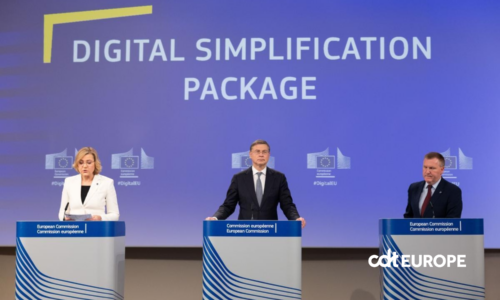
After various months of delays in the AI Act implementation, June saw major milestones in the constitution of oversight bodies and publication of guidance, as well as the publication of the European Union’s long-awaited tech sovereignty strategy.
Potential Avenues for Redress for AI-related Harms under the GDPR: A Visual Explanation
In this second instalment of the series of flowcharts stemming from our report "A Long Road Ahead: Effective Remedies for Artificial Intelligence Harms in the European Union", we look at the opportunities afforded by the General Data Protection Regulation (GDPR) in providing redress for AI-related harms.
May was a defining month for EU AI governance, as the European Parliament and Council reached agreement on the AI Omnibus ahead of key AI Act obligations taking effect. Alongside the deal, the European Commission advanced implementation efforts with new draft guidance on high-risk AI systems and transparency obligations, while debates around AI security, copyright and competition continued to intensify across Europe.
CDT and Cornell Global AI Initiative Call for Meaningful Advancements and Investment into Linguistic Diversity at the First UN Global Dialogue on AI Governance
Joint Call for the Urgent Establishment of the AI Act Advisory Forum
Alongside thirty-four civil society organisations and researchers, CDT Europe is calling on the EU AI Office to provide clarity on the establishment of the AI Act Advisory Forum.