The Free Expression “Internet Opportunity” in Europe
Dynamic and interactive platforms for networking and self-publishing are flourishing in Europe, making the Internet more accessible, more relevant, and more integrated into Europeans’ experience of daily life. Europeans are embracing digital platforms to engage in expressive activities – exchanging news stories, interacting with political leaders, sharing creative content, and launching social media campaigns. And European innovations in digital preservation and language translation tools are enabling greater access to information in Europe and around the world.
Jens-Henrik Jeppesen, CDT’s Director for European Affairs, will be highlighting these sometimes-overlooked aspects of free expression online at “The Internet Opportunity” event today in Brussels. Co-hosted by CCIA Europe and EDiMA, the event will feature panel discussions that explore how policymakers can preserve and enhance Europeans’ opportunities for free expression and innovation, both online and off.
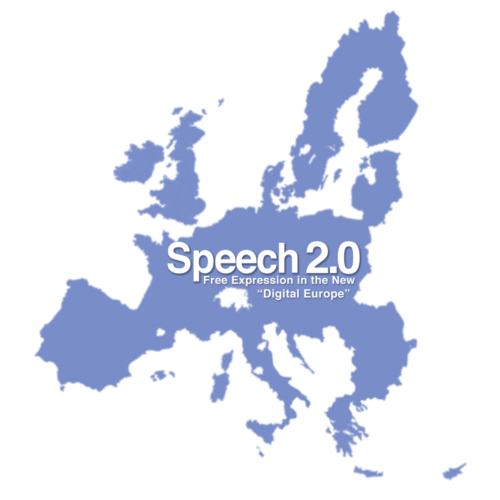
At the Internet Opportunity event, CDT will unveil a new white paper, Speech 2.0: Free Expression in the New Digital Europe. This paper aims to highlight the many ways that Europeans are using the Internet to further the enjoyment of their fundamental free expression rights. The paper provides policy recommendations for maintaining this unprecedented platform for individual expression, including:
Resisting censorship of user-generated content, either directly or via intermediaries,
Safeguarding Internet access, and banning all forms of blocking, throttling, and network disruptions,
Fostering new media pluralism and securing the information environment against the chilling effects of surveillance on journalists and readers, and
Advancing the EU’s ambitious agenda for a “digital Renaissance” by investing in tools for digitisation and sharing of cultural works.
Speech 2.0 documents the many innovations in political organizing, cultural preservation, and support for linguistic diversity that are native to Europe. It demonstraties that Europe’s digital ecosystem is a vibrant and enriching contribution to European society that is poised to grow as increasing numbers of Europeans come online. Though, as UNESCO’s recent Internet study discusses, meaningful access to the benefits of the Internet requires far more than the ability to access infrastructure. People also need media and information literacy skills; locally relevant content, including content in local languages; and there must be a fundamental respect for an individual’s rights to receive and impart information online. Internet users in Europe will continue to reap significant opportunities from the Internet as long as policymakers remain focused on free expression.
As Brussels starts emptying for the summer, the risks of frontier AI models continue to capture the attention of policymakers as a key chapter of the AI Act becomes enforceable, and disclosure rules around the use of AI systems and AI-generated content are further clarified.
CDT Europe’s Feedback on the Draft Guidelines for the Classification of High-Risk AI Systems under the AI Act
CDT Europe responded to the European Commission’s consultation on the draft guidelines for the classification of high-risk artificial intelligence systems.
Open Joint Letter on a Public Reassessment of the EU-US Adequacy Decision
On 29 June, the US Supreme Court ruled that US President Trump can remove the leaders of independent agencies and commissions, overturning nearly 90 years of precedent limiting executive power. This decision raises serious questions about one of the key safeguards underpinning the EU-US Data Privacy Framework adopted in 2023: independent supervision.
Open Joint Letter on the AI Act Regulating AI-embedded Medical Devices
CDT Europe and other 5 organisations representing standardisation, consumers, digital rights, doctors, pharmacists and hospitals published an open joint letter calling EU policymakers to maintain medical devices under the scope of the AI Act.