Risky Business: Advanced AI Companies’ Race for Revenue
Companies developing advanced AI find themselves at a critical juncture. Some have transformed from research labs to product companies, others from social media platforms and internet giants to competitors in the race toward general-purpose artificial intelligence. Recently, these frontier AI companies have faced increasing scrutiny as to whether their business models and corporate structures will generate enough revenue to justify the billions of dollars of investments they and their business partners are making.12
But there has been less focus on the implications of their business model and corporate structure choices for users, both positive and negative. Business models based on targeted advertising in chatbot outputs, for example, will create incentives to collect as much user information as possible, including potentially from the highly personal conversations some users have with chatbots, which inexorably will raise risks to user privacy. We need to pay attention not only to the financial viability of frontier AI companies, but also to how the choices they make in pursuit of that goal may affect users’ rights and interests.
In this brief, we consider five prominent players — Google, Meta, Anthropic, OpenAI and xAI — representing a mix of public and private companies as well as different corporate structures, market orientations, and product offerings. We explore the array of business models that are currently being implemented or considered as well as the corporate structures at play, and analyze the incentives they will likely introduce and the related choices companies may make around product features, model development and safety, data collection and use, and key policy and advocacy positions. The examples provided necessarily represent a snapshot in time of an extraordinarily fast-moving space, and are intended to provide concrete anchors to illustrate the incentives and impacts that may be implicated by each path. Our findings are based on desk research using both primary and secondary sources, including company websites, financial statements, speeches by company executives and staff, interviews, podcast appearances, news reporting, and analysis from experts and civil society organizations.
While all of the companies we reviewed offer some access to their AI models for free, the most immediately visible business model for generative AI products has been monthly subscriptions, typically including both basic ($20-30 per month) and pro ($200-300 per month) offerings.4 A small portion of companies’ user bases pay a subscription; as of January 2025, 20 million consumers (four percent of OpenAI’s user base) paid for a plan, with a far smaller group of 125,000-150,000 Pro subscribers.5 Subscriptions make up the majority of OpenAI company’s revenue, but even with anticipated subscriber growth and price increases, the company is expected to face a revenue shortfall, putting pressure on the company to find additional sources of revenue.6 Anthropic’s subscriptions make up a substantially lower proportion of the company’s revenue, while Google offers both standalone and bundled access to its AI tools along with other subscription offerings.7 Meta is reportedly also testing a consumer subscription for its chatbot.
Figure 1. Individual pricing plans for Claude as of December 2025. (Source: Anthropic)
Unlike many traditional software and digital products, generative AI tools incur marginal costs for each use, and current prices of standalone subscriptions to AI tools appear to leave large gaps between existing revenue and both fixed and marginal costs.8 To reduce resulting shortfalls, several providers have begun throttling power users and are reported to be considering raising prices for certain subscription tiers. Subscription providers typically complement this business model with others like API fees, advertising, and enterprise and federal contracts.9 Those companies that have taken on substantial investment are expected to face significant pressure to find new sources of revenue in coming years.
Analysis
In addition to financial metrics like monthly recurring revenue, key business metrics for subscription services typically include conversion rate, or the acquisition of noncustomers or free users to paid customers, and churn rate, or the proportion of customers who end their relationship with a business over a given time period. Efforts to grow or maximize either metric involves demonstrating sufficient value to end-users to justify the price of the service, especially when reasonably comparable free alternatives exist and switching costs are low.1011 Indeed, OpenAI describes tracking metrics like daily, weekly, and monthly recurring use since they show that “ChatGPT is useful enough to come back to” and subscribe to, emphasizing that such metrics mean the company’s goals are aligned with users’ interests.
Importantly, though, a subscription model can raise privacy issues. If users subscribe at least in part because they find features like personalization and memory to be useful, or they want to rely on agentic tools that deeply understand their intentions and preferences and engage in transactions that require personal details, AI companies will need substantial access to personal and sensitive data to include in the model’s context. And AI companies’ long-term goals to train ever larger and more advanced models mean they may choose to opt in users by default to their interaction data being used for model training and improvement. Alternatively, in exchange for higher prices, enterprise subscribers typically enjoy some additional protections against their proprietary data being accessed or used for model training as well as limitations on data retention.12 In each of these scenarios, users’ data will be integral to choices about business models and the need for revenue, with attendant implications for users’ privacy.
APIs
[OpenAI] [Google] [xAI] [Anthropic] [Meta]
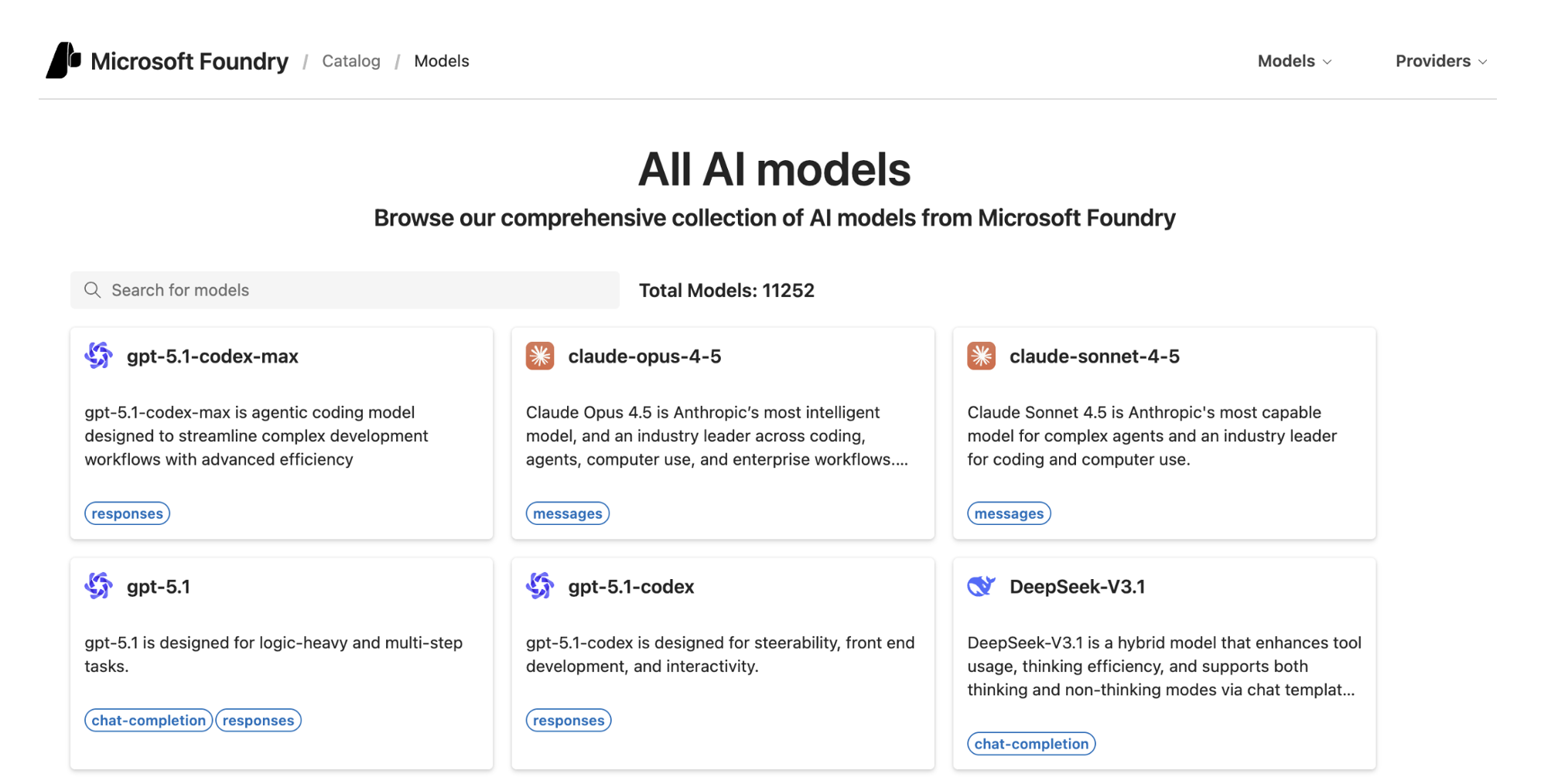
In addition to offering access to models through user interfaces, many AI model developers allow customers to call models via application programming interfaces, or APIs, either directly or through third parties like cloud providers Google, Amazon, and Microsoft or tools like Cursor. Customers typically pay for API use on a per-token basis, or the amount of data that is processed as part of prompts or input or generated as output.
Figure 2. A selection of the 11000+ models available via API through Microsoft Foundry as of December 2025. (Source: Microsoft)
API fees appear to contribute a notable portion of revenue for model developers like Anthropic and OpenAI, with the former deriving a sizable majority of its revenue from API services and the latter bringing in around a quarter of its revenue from its API offerings.13 When a company’s model is offered through a third party platform like Microsoft Azure or Google Cloud, or specialized coding tools like Cursor and GitHub Copilot, the platform and model provider typically share revenue to some degree.14151617 While Meta primarily offers its foundation models in the form of downloadable model weights and has positioned itself as a champion of open source AI, it also makes its models available through an API both directly as well as through third parties.
Analysis
The proportion of existing or planned revenue a company takes from API fees can signal whether a company is prioritizing consumer products or business-to-business services. Business use of third-party models via API means that data, including user data, will flow to those third parties, which may not be immediately apparent to users interacting with an AI tool powered by the model being called. Users of business services, at least, typically enjoy firmer commitments around what the company providing services will and won’t do with data that users provide. Developers may also be more sensitive to expectations of deployers around documentation practices and other disclosures that deployers need in order to conduct risk management. This dynamic has the potential to better create business incentives for B2B developers to invest in governance, safety, and responsibility, though for these market forces to bear out, robust competition in the developer ecosystem is critical. Such forces may be weaker when customers are not engaging directly with developers but rather selecting models more passively through platforms like Microsoft Azure or Cursor, where raw product quality and utility may be the most accessible dimension of comparison. Documentation of AI artifacts and institutional risk management choices such as model cards, system cards, and corporate disclosures can be helpful tools for enterprise and other API customers to compare options and make informed decisions about which provider(s) and/or tool(s) to use.
Advertising and affiliate marketing
[Meta] [Google] [xAI] [OpenAI]
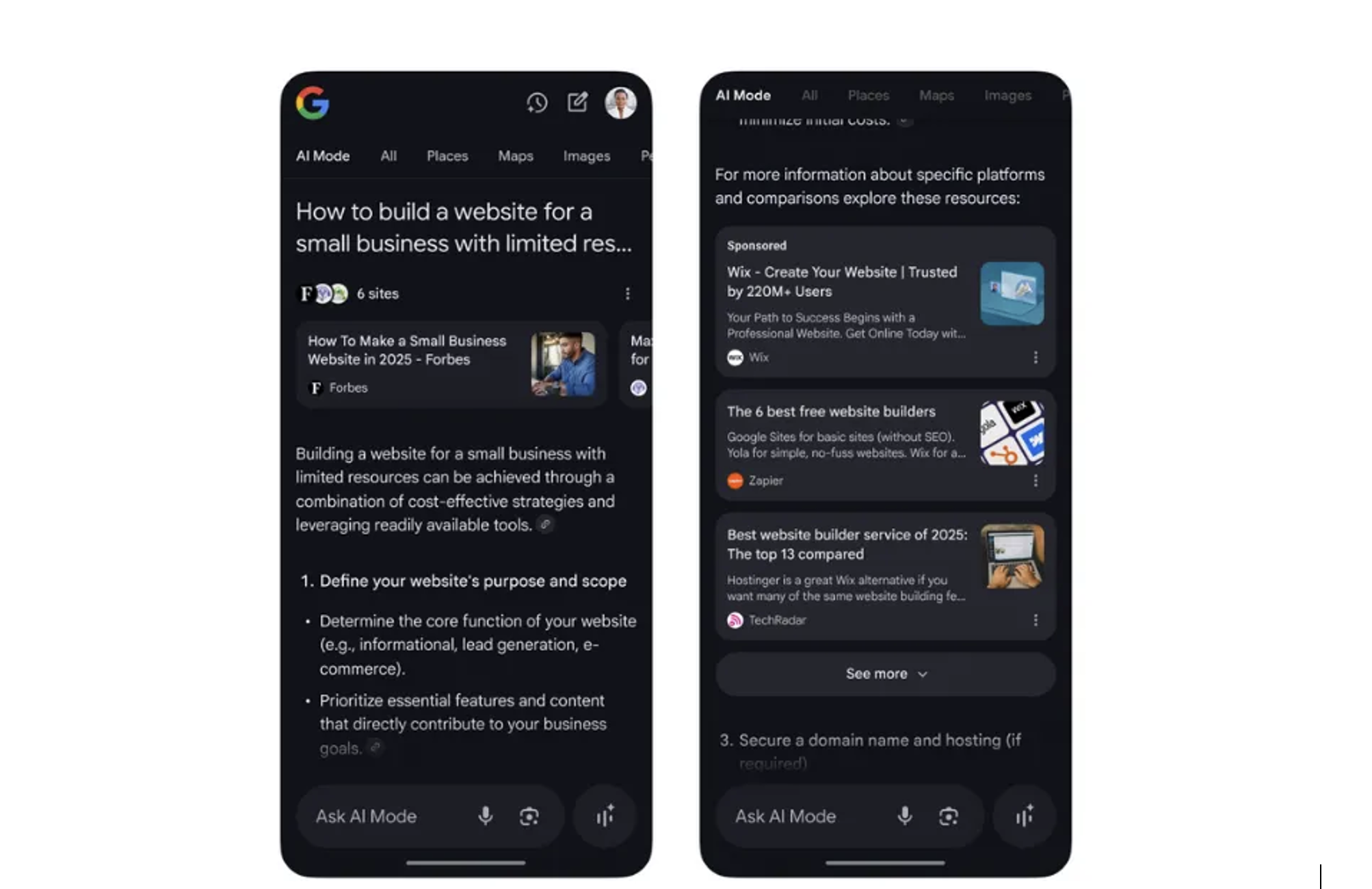
Despite adoption of and experimentation with other sources of revenue, the infrastructure, energy, expertise, and data typically needed to train advanced AI models remains prohibitively expensive, which has led to speculation about whether and when companies will attempt to leverage their audiences and data to power advertising.18 Several companies already use advertising as a primary business model for their non-AI services, and these companies seem to have moved quickly to explore the potential of ads in the context of generative AI. For example, Meta’s Mark Zuckerberg has explicitly noted the company’s intention to introduce ads into its Meta AI product (in addition to integrating a variety of AI-powered features to its traditional advertising tools)19; the company’s CFO has emphasized that its long-term revenue strategy includes increasing the price of ads, driven by improved ad performance, as well as increasing the number of ads that are displayed,20 and the company announced that it will use users’ conversations with Meta AI for ad targeting within the company’s other products.21 Moreover, Meta is integrating its chatbots into existing ad-supported services such as Instagram, presumably under the belief that doing so will increase engagement and power greater ad revenues. Google now offers certain advertisers the ability to display ads in its AI Overviews and AI Mode for search.22
Figure 3. Google ads in AI Overview. (Source: The Verge)
OpenAI’s Sam Altman has at times hesitated to endorse advertising as a strategy the company would pursue, describing concerns that introducing native or in-line advertising within purely conversational interfaces would lead to a rapid erosion of trust,23 but appears to have shifted his position over time.24 Indeed, OpenAI hired as its CEO of Applications a former Meta executive who was in charge of introducing ads into the Facebook News Feed and dramatically scaling them on Instacart as CEO.2526 While the company has not announced plans to integrate advertising, leaked internal memos suggest active work on the matter and external engineers have uncovered references in app code suggesting potential ad integrations.27
Even if they opt not to pursue the most direct approach of native advertising in chatbot interfaces, many of the companies we analyzed appear to be exploring the possibility of seeking revenue through recommendations for products and services, for which companies could charge affiliate marketing fees.28 Affiliate revenue models are widespread on product recommendation blogs like the New York Times’ Wirecutter, where the New York Times earns a fee whenever a reader clicks through to (for instance) an Amazon page and makes a purchase. This approach could prove even more appealing as companies roll out agentic products that may be able to search for, compare, and purchase products or engage with service providers on peoples’ behalf. OpenAI is already building the infrastructure it would need to begin taking in affiliate revenue: it has begun rolling out a dedicated product-recommendation interface in ChatGPT to “find, compare, and buy products.” When users ask questions that have to do with product recommendations, this interface forms part of ChatGPT’s response, and includes images, brand logos, and — critically — direct links to third-party vendors.29 As of this writing, the products that are recommended via this interface, per OpenAI, are “chosen independently and are not ads,”30 and ranked “purely on relevance to the user,”31 but Altman has floated the idea of the company receiving 2 percent of the purchase price as an affiliate fee32 (an amount lower than typical existing market rates, which can vary depending on product or services).33
Unlike the other companies investigated, Anthropic has not publicly contemplated integrating advertising of any kind into Claude, perhaps as a result of its strategy to focus on B2B offerings.
Analysis
For companies already structured around advertising, incentives to improve the performance of existing ads are strong. With increasing scrutiny on the use of third-party data for advertising, platforms are eager to create more sources of first-party data34 — that is, data generated on their own platform — and to leverage that data to serve ads that are most likely to lead to purchases, since such ads command higher prices than less effective ads. Interactions between users and chatbots and other AI products have the potential to provide immense amounts of data that is highly revealing of user preferences and interests and thus for ad targeting. In addition, chatbots, as well as other AI-powered products and services, provide a new surface on which to display ads (e.g., ads that appear adjacent to chatbot outputs or are integrated in the responses themselves).
Although advertising-based business models can provide benefits to users (e.g., enabling companies to provide access to services without charging a subscription or other fee), reliance on advertising-based business models can warp the incentives around user privacy. They create a clear motive to collect as much data as possible to use for ad targeting. Histories of chatbot interactions collected for memory and personalization, for example, can also be used for ad targeting. In addition, many of the other concerns that have arisen from ad-based business models for other online services will apply equally or with greater force to the extent these emerge in AI products and services. A few examples include (a) the potential for targeting to discriminate based on characteristics such as race or gender or even political or religious views, particularly given the often revealing nature of chatbot interactions; (b) a greater incentive to maximize user engagement, which has been demonstrated to increase the risk of harms stemming from chatbot use35; and (c) the potential to mislead users to the extent that ads are not clearly identified and differentiated (e.g., product recommendations in response to user queries are influenced by payments but not disclosed to users). At the same time, AI products may offer potentially more effective ways of addressing these issues (e.g., in some contexts, natural language interfaces may allow for more effective transparency to users).
Meanwhile, affiliate marketing, which e-commerce platforms report can be four times as effective as ads,36 is on the rise.37 On one hand, affiliate revenue is somewhat distinct from paid placement, where a platform gets a fee in exchange for displaying a product to a viewer; with affiliate revenue, the platform can retain editorial discretion over what gets displayed to the user, but gets a fee when the user makes a purchase based on what they see. On the other hand, the extent to which this distinction mitigates concerns about financial relationships unduly impacting recommendations may depend on the structure of the affiliate incentives. For instance, if certain vendors or service providers pay substantially more in affiliate fees, an AI provider may be motivated to consider financial return alongside or above user satisfaction, which could lead the company to recommend more lucrative products or services more often, even if there are alternatives that users might find equally suitable. An example of this dynamic is apparent in Facebook’s ad auction where, in addition to considering an advertiser’s bid, the platform also considers a person’s likelihood of taking action on the ad and other measures of ad quality, aiming to balance revenue with relevance.38 The mirror image could very well take shape in an affiliate fee structure, where the recommended product or service first considers relevance to the user but is modified by predicted revenue.
An affiliate marketing or referral-style business model could lead AI tools to take on the dynamics of online influencers, and raise questions about what AI systems ought to disclose about whether a recommendation was financially motivated, or whether the AI system might be receiving some kind of preference in another context (akin to an influencer receiving free products to review) in exchange for surfacing the product to a wider audience. In some domains, such as healthcare, laws prohibit remuneration for certain types of referrals, so AI providers would need to ensure compliance with these statutes.39
As AI companions are increasingly marketed as “friends,” this business model can cause significant concern as the line between “friend” and advertiser gets blurred. Typically, people understand that an advertiser has a self-interest in promoting its own products, but friends in general do not have the same incentives — as a result, we often take recommendations from friends more seriously. As these AI “friends” come to know everything about the user and can take that into account when deciding to provide an advertisement, the opportunity for persuasion bordering on manipulation increases (e.g., Is the user more susceptible to purchases late at night, or did they just go through a traumatic event, or are they going through a health issue?) Despite the deeply problematic implications, such highly personalized advertisements may nonetheless drive advertisers’ desired outcomes, supporting higher ad prices and contributing to AI companies’ strong financial incentive to find ways to tap into their unprecedentedly deep knowledge and analysis of their users to persuade them to take actions they would not otherwise take.
Such a business model can also easily bleed into lead generation marketing — that is, selling information that consumers are interested in a product or service. Lead generators are typically middlemen who aim to collect signals of intent and sell them to service providers. Lead generation is common in industries like healthcare, legal services, staffing, and higher education — and concerningly, is known to contribute to the peddling of harmful products like payday loans and for-profit universities.40 Lead generators might offer lucrative commissions to AI providers (who might not realize that they are promoting harmful products) since they expect to earn even more from the business or service providers seeking to access people most likely to engage in a major financial transaction. Businesses typically pay higher rates for “qualified” leads, or people who meet a set of conditions such as eligibility to apply for a loan (information an AI tool could easily elicit), which would make such a business model even more appealing for lead generators to exploit.
Commerce, transactions, and marketplaces
[OpenAI] [Google] [Meta] (Anthropic)
Beyond directing users to external vendors and service providers, many AI leads envision an emerging ecosystem of AI agents, tools that interact with one another and operate on behalf of users and business, often in the context of commerce, and product strategies stem in part from this vision. For instance, some AI providers are beginning to integrate commercial transactions and marketplaces natively, where users can make purchases directly within AI apps. Google announced a native checkout feature in its AI Mode tool in May,41 and OpenAI followed suit, launching in-app purchasing for goods from marketplace and e-commerce platforms Etsy and Shopify.
Figure 4. OpenAI introduced so-called agentic commerce within ChatGPT, allowing users to search for and purchase products within the conversational interface. (Source: OpenAI)
The company also open sourced what it calls a standard for AI commerce, the “Agentic Commerce Protocol,” which it explains will enable other merchants to make products available for purchase directly in ChatGPT as well as other agentic tools.42 Merchants pay a “small” fee, the amount of which they have declined to publicly disclose, for completed transactions.43 Meta and X have actively pursued adding payment tools to their platforms, but as of the writing of this brief have not made clear their plans about integrating payments or checkout into their AI offerings. Meta is also leaning into AI-powered business messaging to attract more merchants and companies to transact within Meta tools by offering in-conversation personalized product recommendations and tools to drive customer conversion; the company has made the tool free to advertisers and is considering charging fees for integrating the tool into companies’ own websites.44
Figure 5. OpenAI has introduced apps inside ChatGPT. As of December 2025, a handful of apps are in preview for certain account tiers. (Source: OpenAI)
Some companies appear to be pursuing strategies involving app marketplaces, building tools and releasing software developer kits and open protocols that could enable additional in-app features as well as catalyzing ecosystems of AI-enabled services. For instance, Anthropic released an open protocol, called the Model Context Protocol (MCP), to enable AI systems like Claude to interact with external tools, and curates a directory of tools that have enabled connections with Claude such as Asana, Paypal, and Zapier. Developers can request to be included in the directory, contingent on Anthropic’s approval and conformity with the company’s Connecters Directory policy.45 While app developers do not need to pay in order for their apps to be featured, only paid users of Claude can currently use Connectors, potentially a play to convert free users to higher tiers.46 OpenAI is also leaning on tool use: after experimenting with the GPT Store, a feature that let users share customized versions of ChatGPT and receive payment based on user engagement,47 OpenAI introduced Apps, or third party tools integrated directly into ChatGPT (enabled in part by the MCP protocol). Initial apps include Booking.com, Expedia, Coursera, Spotify, and Zillow, and while details on revenue structure at the time of announcement were slim, OpenAI leaders indicated intent to support monetization of apps in the future, such as through the ChatGPT’s Instant Checkout feature.48
Analysis
In many ways, product choices in this thematic area resemble the “platform plays” tech companies pursued in recent decades, aiming to capture and leverage for profit significant elements of emerging ecosystems. Revenue strategies are typically not fully executed, nor even finalized, immediately; rather, companies aim to attract a broad user base, leverage network effects, and build two-sided markets, or intermediaries that facilitate interaction between two groups like buyers or sellers.49 One could easily imagine AI companies charging or increasing fees for these features, or introducing revenue-sharing with app developers, which leads to questions about how platforms will recommend or prioritize apps that provide services that compete with one another.50 OpenAI has said it plans to “prioritize the user experience above all else,” but lessons from digital advertising suggest that considerations for user preference can still be combined with revenue interests by considering bids for app or product placement along with or as a tie-breaker for user preference.
Some have speculated that companies may have already recognized that foundation models are becoming commoditized and so are pursuing strategies related to the apps and agentic tools built on top of them,51 which could bring with it many familiar business model plays and their implications, such as anticompetitive practices to “lock in” platform users or raise prices among a captive market.
Government contracts
[Google] [xAI] [OpenAI] [Anthropic] [Meta]
Globally, government contracting represents trillions of dollars in business annually,52 and AI providers are turning towards government clients, both domestically and internationally, as a major source of potential profit. In 2024, for instance, contracts for IT products and services across civilian agencies within the U.S. federal government amounted to $17.5 billion,53 and AI-related contracts accounted for at least $270 million in 2022.54 To take advantage of this lucrative marketplace, Google,55 Meta,56 OpenAI,57 Anthropic,58 and xAI59 all now offer “for government” versions of their products that are purportedly tested and fine-tuned to adhere to government privacy, security, and performance standards.
AI providers use several different contracting vehicles and government partnerships to offer their services directly to public agencies. These include government-wide initiatives — such as OpenAI’s recent partnership with the German government60 — as well as standalone contracts with individual public agencies for discrete projects or for a fixed number of licenses or subscriptions for employees — such as Google’s contract with Nevada’s Department of Employment, Training, and Rehabilitation to analyze unemployment benefits determinations61 or the Pentagon’s contracts with Anthropic, Google, OpenAI and xAI valued at up to $200 million.62 Moreover, some AI providers, like Google, have existing contracts with government agencies and offer access to AI products, often for free and without explicit approval from their government clients, as part of existing contracts for enterprise-wide IT services. The video conferencing platform Zoom, for example, added access to the provider’s AI tool to any government agency with an existing paid contract for Zoom for Government.63 Most recently, a number of major AI providers — including Google,64 Meta,65 OpenAI,66 Anthropic,67 and xAI68 — inked deals with the General Services Administration to provide all U.S. federal agencies with access to their models at low or no cost for one year.
Analysis
Government contracting is an appealing line of business for AI providers and other technology companies because of its relative stability and potential to serve as a long-term predictable source of income. Indeed, vendor lock-in — the process by which government agencies become dependent on a specific vendor such that the costs of switching to a new vendor outweigh improvements and cost-savings that may be realized from such a switch — is a common issue across the government.69 As a result, it is a strategic imperative for AI providers to integrate their products rapidly and at-scale throughout government agencies in order to reap the potential benefits of a fixed revenue stream once their tools become essential to an agency’s operations or services, leading many major AI companies to offer public agencies time-limited access to their models for low or no cost.
Beyond the direct financial gains that AI providers hope to realize from working with public agencies, government contracts also present the potential for AI companies to access vast amounts of data held by public agencies to train and fine-tune their models using information that would be otherwise inaccessible, though an increasing number of AI providers are committing to not use government data for model training without explicit approval.70
At the same time, government use of AI can be fraught. Companies may become aware of — and face heightened responsibility for — human rights impacts or abuses by their government customers, particularly related to defense purposes, and will need to decide how to respond. Microsoft, for example, faced protests for providing cloud services to the Israeli military during the course of its operations in Gaza, leading the company to stop providing certain capabilities to the Israeli Ministry of Defense.71 While Anthropic has contracted with the U.S. defense apparatus, the companies’ policies prohibiting law enforcement from leveraging its models for domestic surveillance have limited how agencies like FBI, Secret Service, and Immigration and Customs Enforcement can use the company’s models, reportedly frustrating the White House.72
If AI companies become too reliant on government contracts, though, government leaders may use that relationship to exert leverage over their operations or policy postures. During a public dispute between President Donald Trump and Elon Musk, for instance, the president threatened to cancel contracts with Musk’s companies.73 In the summer of 2025, the Trump Administration issued an Executive Order that leverages the federal government’s contracting power to require that AI providers modify their products to adhere to the Administration’s ideological priorities.74 The United States government has also demonstrated recent willingness to acquire sizable stakes in public companies75, and some commentators have even floated the idea of nationalizing frontier AI labs and enabling a sort of new Manhattan Project in the interest of national security.76 Such moves would significantly complicate the influence the government has over AI companies.
Devices
[Meta] [Google] [OpenAI] [xAI]
In addition to research and development of AI models, multiple frontier AI companies are pursuing strategies to either launch or grow markets for devices that can serve as vehicles for AI-powered experience, or embed their AI in existing consumer devices. For example, Meta continues to sell AI glasses in partnership with well-known eyewear brands, integrating its Meta AI chatbot and other tools into the devices, while OpenAI acquired Apple former lead designer Johnny Ive’s startup for over $6 billion to pursue physical AI products.77
Figure 6. Meta Ray-Ban Display AI glasses. (Source: Meta)
Google, meanwhile, has announced that existing devices from watches to tablets to cars will integrate the company’s Gemini models.78 And xAI appears to be working to integrate its Grok chatbot into the Optimus line of humanoid robots.79
Analysis
Despite the notable failure of devices like Google Glass and more recently the Humane AI pin, devices nevertheless remain components of some companies’ business strategies. Leaders see such devices both as new platforms for ambient computing and as necessary tools to gather the context necessary to power all-purpose AI assistants.80 Depending on whether they are audio- or video-enabled, AI-powered devices present increased privacy risks for both users — smart glasses are designed to capture signals like eye tracking and telemetry data, and Meta recently launched a “neural” wristband to connect subtle hand movements to the company’s glasses interface — and bystanders due to ambient data capture with, often, insufficient notice. While Meta has not released facial recognition capabilities on its glasses, a pair of Harvard students easily hacked a way to add the capability to the devices, raising concerns about how easily they could be used for doxxing and surveillance.81 Even without cameras, ambient listening of devices like Amazon Echo and its AI interface Alexa have raised significant privacy concerns in recent years, particularly when it was revealed that humans were reviewing audio data in order to train AI models. Stored audio and video data could also be vulnerable to hackers, as well as requested by law enforcement. But as AI companies exhaust existing multimedia data from the internet and private sources to train ever more advanced AI models, such devices and the volumes of video and audio data they could produce could prove compelling to companies aiming to build “world models” that some deem necessary to advance the AI frontier.82
Contributing to existing value propositions
[Google] [xAI] [Meta]
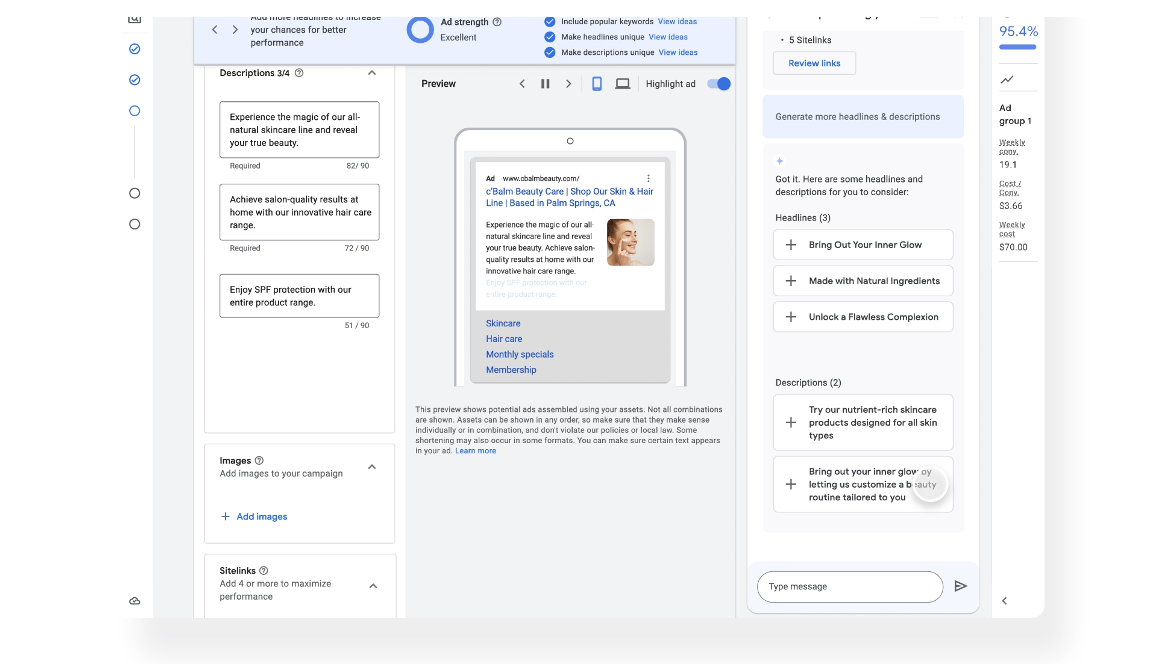
For established companies, the quickest path to see returns from AI investment has been integrating advanced AI tools into existing business strategies. Google, for instance, has integrated Gemini into all 15 of its core products, including Android, Chrome, Gmail, Maps, Play Store, Search, and Youtube, reaching over half a billion users,83 as well as into Google Ads to help advertisers generate copy and visuals and make adjustments to campaigns.84
Figure 7. Gemini-powered conversational features in Google Ads tools. (Source: Google)
In addition to other AI integrations into its ad business, Meta has developed a Generative Ads Recommendation Model (GEM) to optimize ad results,85 likely under pressure to deliver greater value to advertisers in the face of rising ad prices against stagnant performance.86 The company has claimed that its use of GEM increased ad conversions by up to 5% (a significant increase in this context) in early tests, shared that 4 million advertisers have reportedly used “at least one” of Meta’s generative AI ad tools,87 and announced its aim to make ads fully AI-generated by 2026.88 The company also announced that it would use people’s interactions with the Meta AI chatbot to personalize ad delivery.89 Observers have speculated that xAI could provide value to X (formerly Twitter) by enhancing advertising or to Tesla by powering voice assistants for Tesla vehicles.90
Analysis
Unlike upstarts OpenAI and Anthropic, established tech companies are in a position to self-fund their investments in artificial intelligence — a reminder of how the massive scale of these platforms can be leveraged to extract value from this new technology91 — but at the same time, public companies like Meta and Google will face more immediate pressure to show returns to shareholders or otherwise justify their investments. Even xAI, a private company, is enmeshed with other Musk-owned companies — SpaceX has invested $2 billion in the company,92 while Tesla shareholders sued Musk for diverting the company’s resources to the new AI venture.93 Legacy companies are also scrambling to avoid cannibalizing their existing businesses with new AI offerings. Google, for instance, risks cannibalizing its search and display advertising by presenting information in AI Overviews and AI Mode, and has attempted to reassure advertisers that it will offer ads on the new surfaces and offer tips to improve visibility in AI results.94 However, if companies exposed to shareholders fail to demonstrate the value of their sizable AI investments over a reasonable time period, they may face pressure to pull back, leaving room for newer entrants.
Corporate structures
Among the five companies examined in this report we find two publicly-traded corporations (Google’s parent company Alphabet, and Meta), one public benefit corporation (Anthropic), and two whose legal structures seem to be in flux. OpenAI Global LLC recently announced its transition from a for-profit company wholly owned by the non-profit OpenAI Inc to a PBC structure. Finally, xAI was founded as a Nevada PBC but quietly changed its status to a for-profit corporation in 2024.95
Google and Facebook (now Alphabet and Meta) have the most traditional business structures as publicly-traded companies. At the time of their respective initial public offerings (IPOs), they touted their multi-class share structures as a way to protect founders’ ability to make decisions in line with the public interest and/or the long-term interests of the company rather than short-term Wall Street interests.96 At the same time, the adoption of this share structure means these companies and their leaders may be less responsive to shareholder advocacy and other forms of accountability.97
The remaining three companies are or have been public benefit corporations (PBC or B-Corp). A PBC is a for-profit entity that is legally committed to a public interest mission while retaining its fiduciary duty to maximize profits. Unlike nonprofits, PBCs are subject to taxation and may issue dividends to shareholders. PBCs are expected to consider the impacts of business decisions on both shareholders and other stakeholders, as specified by their mission. Some states, including Nevada, also require PBCs to publish periodic reports on progress toward achieving their mission. PBC status allows a company to simultaneously pursue a public interest mission alongside profit, notably by shielding it from shareholder lawsuits alleging that the public interest mission undermines the company’s fiduciary duty.98 If the company fails to fulfill its public service mission, accountability mechanisms include shareholder resolutions and litigation, reporting obligations, and any other state-level requirements.
The mission of PBCs are permitted to remain quite vague. For example, Anthropic’s mission is “the responsible development and maintenance of advanced AI for the long term benefit of humanity.”99 This mission does not lend itself to measurable milestones, and it’s hard to imagine how a plaintiff (whether a shareholder or other stakeholder) could demonstrate the company was failing to advance this very general mission.
Figure 8. OpenAI’s corporate structure prior to its recapitalization in October 2025. (Source: Axios)
OpenAI presents the most complex corporate structure, though the recapitalization announced in October 2025 simplified it significantly. OpenAI was created in 2015 as a 501(c)(3) nonprofit with its stated mission being “to ensure that artificial general intelligence (AGI) — by which we mean highly autonomous systems that outperform humans at most economically valuable work — benefits all of humanity.”100 It subsequently created a wholly-owned for-profit corporation, allowing it to solicit investments rather than donations, which it explained were needed to obtain the scale of resources necessary to achieve the organization’s technical mission.101 (OpenAI, Inc. was the nonprofit parent organization, while OpenAI Global, LLC was the main for-profit subsidiary). OpenAI Global, LLC was structured as a “capped” for-profit, with returns to investors limited to 100 times the investment made.102
The complex structure was intended to ensure that the for-profit subsidiary remained governed by the mission-driven nonprofit, while providing opportunities for outside investment. However, the nonprofit’s charter left a number of key questions unanswered, including how “economically valuable” work should be defined or how OpenAI will know that AGI “benefits all of humanity.” The following year, the company announced that OpenAI Global, LLC would restructure as a for-profit PBC, with the nonprofit OpenAI, Inc. retaining minority ownership and Altman, OpenAI employees, and others receiving equity in the new PBC, which would no longer cap investor returns.103 But the plan faced numerous challenges, and OpenAI then released an “updated” plan, under which the nonprofit would continue to “control” the new PBC and “also be a large shareholder” of the same.104
In November 2025, OpenAI announced that the nonprofit entity would be renamed as the OpenAI Foundation, while the LLC would become OpenAI Group PBC. The Foundation owns 26% of the OpenAI Group, with the two entities sharing all its Board members save one — Dr. Ziko Colter, who chairs the Foundation’s Safety and Security Committee (SSC), and has non-voting observer status on the OpenAI Group Board. The SSC is responsible for “providing governance over the safety and security practices of all of OpenAI, including OpenAI Group.” A second, unspecified member of the Foundation’s Board is due to transition to non-voting observer status on the OpenAI Group board by October 2026.105
The OpenAI Foundation’s 26% equity in the PBC makes it the second-largest shareholder, after Microsoft’s 27%. Remaining shares are owned by various investors, including current and former OpenAI employees. Under the terms of the recapitalization, the OpenAI Foundation is set to receive additional equity in the company if the share price increases by more than a factor of ten by 2040.106
Anthropic was founded in 2021 by former OpenAI employees to focus on research into AI safety. The company structured itself as a PBC from the start, incorporated in Delaware, and in 2023 announced the creation of a Long-Term Benefit Trust (LTBT) that it describes as the company’s “attempt to fine-tune our corporate governance to address the unique challenges and long-term opportunities” of AI.107 The Trust owns special “Class T” shares in the company and comprises five “financially disinterested” members who do not own stock in the company, with the authority to remove and appoint a gradually increasing number of Anthropic’s Directors. At the time of the announcement, the Trust controlled one board seat; the Trust now elects three out of five Directors, with ordinary shareholders electing the remaining two. The stated purpose of this arrangement is to ensure that the Board will account for externalities — positive and negative — associated with the development and deployment of advanced AI in its future decision-making, alongside financial considerations. Citing the Trust’s experimental nature, the setup provides for a mechanism by which a “supermajority of stockholders” can amend the Trust’s charter without the consent of the trustees.108
Finally, xAI was created as a Nevada profit corporation in March 2023, then amended its charter a month later to become a benefit corporation with a mission “to create a material positive impact on society and the environment, taken as a whole.” In May 2024, xAI amended its charter once again, shifting back to a for-profit structure while continuing to publicly present itself as a PBC — including in court documents pertaining to its November 2024 suit against OpenAI. In March 2025, xAI merged with X, the social networking platform formerly known as Twitter, in an all-stock transaction.109 The resulting company is privately held under a multi-class share structure that seems likely to ensure Elon Musk’s continued control over the company.
Analysis
At the time of their respective IPOs, Google (now Alphabet), Facebook (now Meta), and other Silicon Valley “unicorns” framed their decisions to primarily issue stock without voting rights to ordinary shareholders while retaining majorities of voting shares for their founders and other top leaders as a necessary bulwark against investor pressure to prioritize short-term returns over users’ best interests. Advanced AI companies like OpenAI, Anthropic and xAI have presented similar arguments in favor of the PBC structure. Anthropic has also put additional constraints around its ability to make decisions that might undermine its public-interest mission.
None of these company structures, however, seems to have insulated each of these companies from increasing pressure to generate revenue from their AI offerings, and as discussed above, the various revenue models under consideration for frontier AI companies introduce incentive structures that may at times be in tension with users’ interests.
Conclusion
Companies building AI systems, whether AI-focused startups like OpenAI and Anthropic or established tech giants like Google and Meta, have thus far relied heavily on outside investment or subsidies from profitable business units rather than revenue from AI products themselves. These investments hinge on the promise of future returns that are themselves dependent on a specific vision of the future: one in which most economic activity incorporates AI tools in one way or another, and people incorporate AI into all aspects of their lives. The race to “artificial general intelligence,” or AGI, looms large in that vision of the future. Even if that vision of the future does eventually come to pass, companies are already under pressure to start earning revenue to tide over their investors (OpenAI, Anthropic) or to increase profit margins for existing businesses (Google, Meta).
In light of that pressure to generate revenue, this brief offers stakeholders a preliminary framework through which to make sense of the moves major companies are beginning to make and may continue to develop in the coming months and years. The five frontier AI companies examined in this report all appear to be pursuing revenue from a combination of six potential business models: subscriptions, APIs, advertising and affiliate marketing, e-commerce, government contracts, and contributing to existing value propositions. As was the case with social media, many of these revenue models create incentives for companies to maximize both the time users spend engaging with the product and the data collected about each user, and introduce familiar, if intractable, issues of content moderation that apply to ads and to chatbot outputs alike. As they develop their product lines, firms should carefully consider the incentive structures they are creating and concurrently set up durable, countervailing processes to mitigate potential harms to users arising from such incentives. Policymakers should likewise consider how law and regulation might usefully shape company behavior to protect users and the public interest.
CDT Comment Welcomes NIST Effort to Develop Zero Draft
Drawing on CDT’s previous comments on this NIST effort and our prior research on documentation, our submission welcomes NIST’s effort to develop the zero draft, which provides a much-needed step toward more standardized, high-quality guidance on how developers of AI system components should document key properties and potential sources of AI risk. This guidance will be a valuable resource for organizations to improve interoperability, build more performant AI products, and more effectively identify and mitigate AI risks.
Coalition Urges Senate Not to Let Companies Waive Financial Regulations for AI
CDT joined AI Now Institute, American Civil Liberties Union, and several organizations dedicated to tech policy, consumer protection, and civil rights in a letter to Senate leadership and the Senate Banking, Housing, and Urban Affairs Committee opposing the “AI Innovation Labs” language in Sec. 10509 of the CLARITY Act.
As concern about risks and harms related to AI systems continue to grow, a growing chorus of policymakers, industry leaders, and advocates have called for independent AI assessments. This explainer provides an overview of recent proposals for third-party assessment in the United States, including state and federal legislation, executive actions, and industry proposals.
Having third parties assess AI systems might seem like common sense, but crafting effective policies toward this goal can be devilishly tricky. A poorly-constructed ecosystem for third-party assessment could easily fail to consider the most consequential mechanisms of risk, neglect the AI harms that most impact people, or do more to protect AI companies than people.