This year has seen a flurry of attention around student data privacy: over 180 state student privacy bills have been introduced, and Congress is considering multiple federal student privacy bills. CDT has written about the rapid adoption of EdTech in American classrooms, and state and federal efforts to regulate EdTech data collection.
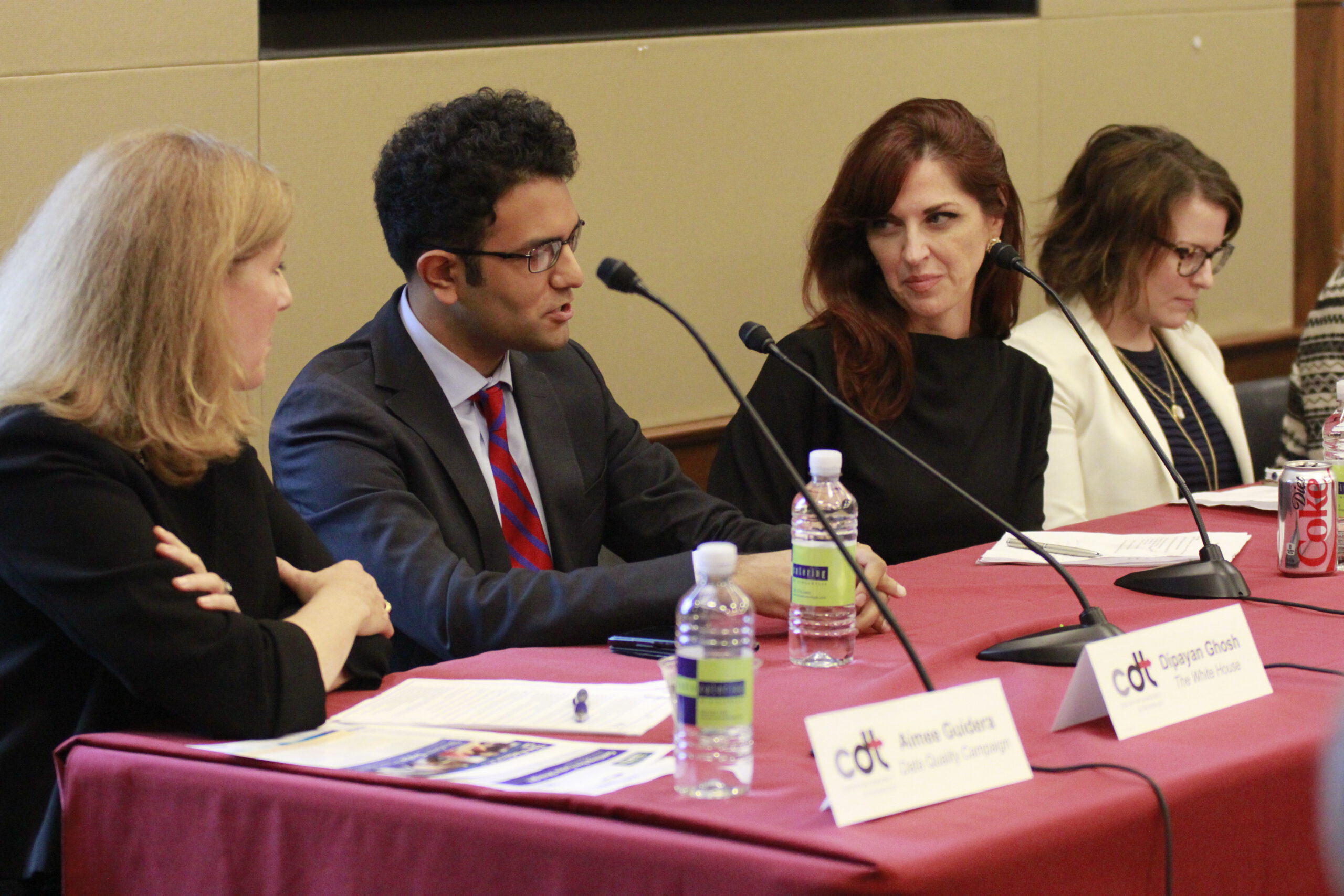
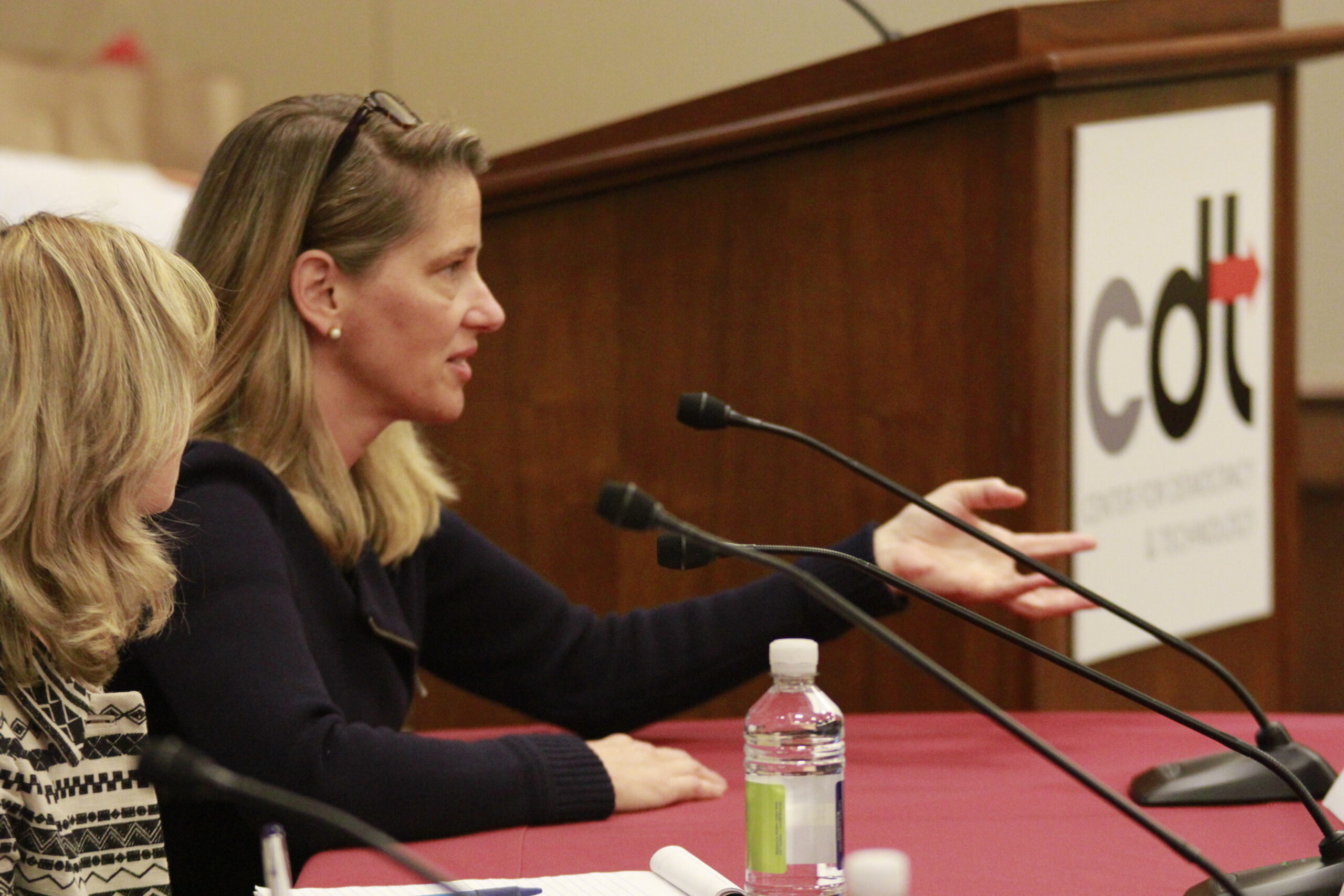
Last week, CDT continued this conversation with a Hill briefing on the topic. The briefing, “Privacy and the Digital Student: Paths Forward,” brought together advocates, industry leaders and Congressional members and staff to discuss the state of student privacy law and policy. Congressmen Luke Messer and Jared Polis shared remarks on their Student Digital Privacy and Parental Rights Act (legislation CDT strongly supports).
Rep. Messer noted in his remarks that the “status quo” of state and federal student privacy legislation is not acceptable for parents and should not be acceptable for industry. He urged legislators to address student privacy concerns now, before a major crisis occurs that would cause Congress to overact and pass laws that “derail years of EdTech advancements and frankly eliminate new technology adoption all together.” According to Rep. Messer, the goal of the Student Digital Privacy and Parental Rights Act is to encourage 21st century innovation while ensuring parents have the right to protect their students’ privacy.
Rep. Messer’s remarks were followed by a lively panel discussion moderated by CDT’s President & CEO, Nuala O’Connor, with representatives from Common Sense Media, Data Quality Campaign, Google, Microsoft, and the White House. Nuala kicked off the discussion by asking panelists to share their vision of what the American classroom will look like in 2060. Panelists discussed the importance of data in the classroom and emphasized the need to “get this issue right”. Others noted that informed decision-making is key to creating rules for EdTech and establishing an environment for safe data use and storage. Allyson Knox, from Microsoft’s education policy team, stressed the importance of EdTech training and data literacy for school administrators and teachers – a point many of the panelists and audience members echoed.
The event concluded with remarks from Rep. Polis. Rep. Polis discussed the significance of the Student Digital Privacy and Parental Rights Act and his desire to build support for the bill among federal legislators to indicate to the public that Congress is not “tone deaf” to student privacy concerns.
RT @FERPASherpa: @DQCAimee “we now have the power to change kids’ lives (for the better) in the moment” & “cannot afford not to” @CenDemTech — DataQualityCampaign (@EdDataCampaign) June 2, 2015
Coalition Urges Senate Not to Let Companies Waive Financial Regulations for AI
CDT joined AI Now Institute, American Civil Liberties Union, and several organizations dedicated to tech policy, consumer protection, and civil rights in a letter to Senate leadership and the Senate Banking, Housing, and Urban Affairs Committee opposing the “AI Innovation Labs” language in Sec. 10509 of the CLARITY Act.
Potential Avenues for Redress for AI-related Harms under EU Equality and Non-Discrimination law: A Visual Explanation
In this third instalment of the series, we look at the opportunities afforded by EU equality and non-discrimination law in providing redress for AI-related harms.
The Privacy Paradox: How Government Data Has Become Less Private and Less Useful
Providing ready access to information collected and maintained by the government promotes accountability, innovation, and research, making transparency a core responsibility of serving as a steward of the public’s data. Public agencies must also safeguard sensitive information when making data publicly available.
Defending State Data: Lessons from California v. USDA
As the federal government increasingly seeks access to state administrative data, policymakers should consider not only legal authority and privacy implications, but also the practical effects on public confidence, program effectiveness, and states’ ability to fulfill their obligations to residents.