Political Influencers and Democracy in the Digital Age
This article – authored by CDT’s Isabel Linzer and Becca Branum – first appeared in NYU Law’s Democracy Project on January 28, 2026. A portion of the text has been pasted below.
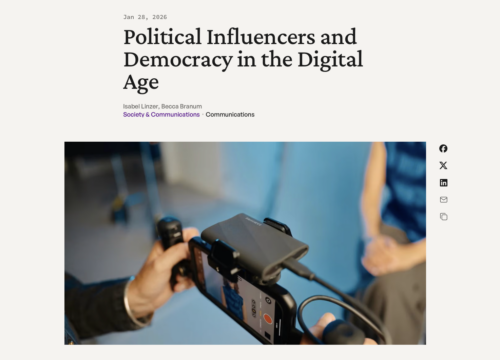
Social media influencers sit at the center of how millions of Americans understand and participate in our democracy. Their posts shape civic participation, offer commentary that feels personal and authentic, and increasingly serve as vehicles for campaigns, PACs, and marketing agencies looking to reach voters in ways users experience as more intimate than traditional ads. As ourArchitects of Online Influence report documents, political influencer activity has grown rapidly: political actors spent tens of millions on creator-driven messaging in 2024, party conventions welcomed scores of influencers, and nearly a fifth of Americans regularly get news from creators online. Content creators have also been caught up in opaque and even illegal practices, such as channeling foreign funds to influence U.S. elections.
Yet even as political creators — those who post about politics on social media as part of their business model but are unaffiliated with traditional media outlets — play a defining role in how the public engages with American democracy, they operate in a governance vacuum. Relevant policy areas have not caught up to reality, nor have norms regarding transparency for paid speech. As a result, the influencer industry slips through the cracks of federal campaign finance law, congressional oversight, and platform policies, raising a fundamental question about how to ensure that the fast-growing political influencer ecosystem develops in a way that aligns with democratic interests.
When the Algorithmic Odds are Not in your Favor: Algorithmic Poisoning and the 2026 U.S. Midterms
As the 2026 midterms approach, policymakers, election officials, and AI developers and deployers share responsibility for understanding how algorithmic poisoning operates and taking concrete steps to reduce its impact.
A Fractured Shield: Changes to Cyber Information Sharing Put Elections at Risk
Cyber information sharing connects election security partners, empowering cyber defenders, uplifting risks to be mitigated, and fostering a common understanding of the threats and security of the community.