Paywall to Georgia’s State Legal Code a Broad Misapplication of Copyright Protections
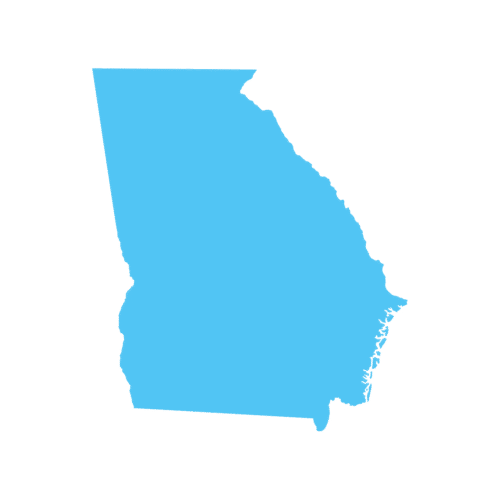
Imagine that you have been arrested for a crime. You have been told that you have done something wrong, but to understand the charges against you, you must pay a fee to gain access to the official state legal code. This is not the precursor to another dystopian novel — it is a reality for the citizens of Georgia, where public access to the law is limited by the broad misapplication of copyright protections.
The Center for Democracy & Technology (CDT) has joined our colleagues at the ACLU Foundation and the ACLU Foundation of Georgia in filing an amicus brief in Code Revision Commission v. Public.Resource.Org. The brief calls on the U.S. Court of Appeals for the 11th Circuit to preserve equal access to justice by upholding established precedent that bars the state from copyrighting its laws. We are joined on the brief by the Southern Poverty Law Center and the Georgia Coalition for the People’s Agenda.
The case is shaped by the unique circumstances under which the state of Georgia publishes its official state legal code, known as the Official Code of Georgia Annotated (OCGA). The state publishes only an annotated version of its state law, which serves as the legal code that state agencies, courts, and lawmakers rely upon and cite to. Georgia claims that because the OCGA contains annotations, it transforms the code into a copyrightable work that can be sold for profit. As a result, to gain access to the official version of the laws that govern them, Georgians can do so only after ordering it from a legal publisher for $395, not including shipping and tax.
As the brief illustrates, this approach conflicts both with legal precedent and sound public policy. While the state of Georgia claims copyright in the OCGA, the legal code is truly owned by its citizens, who authored the laws through the democratic process. By effectively placing the official state code behind an expensive paywall, Georgia obstructs open access to the law and strips its citizens of their due process rights under the 14th Amendment. Consequently, without proper notice, the law will not be as effective as a “guide or a deterrent to public behavior.”
CDT will continue to stay engaged in this case and will challenge any ruling that uses copyright law to obstruct equal access to justice.
Not All Guardrails Are Created Equal: Comparing Content Safety and Copyright Filtering
As courts and policymakers work through questions about chatbot liability, they should be wary of analogies that flatten meaningful technical differences. Copyright filtering and safety intervention share real challenges around ambiguity and evasion, but they diverge in what each control must assess, how each manifests over the course of a conversation, and how much can be verified from the outside.
Op-Ed: France’s Constitutional Council Ruling Tests the Limits of Social Media Bans
Read our analysis the legal and policy significance of the Constitutional Council’s decision on ongoing social media age restriction and age assurance debates ahead of the most-anticipated EU-wide approach on child online safety due by December 2026.
The brief explains that Section 230’s liability protections are essential to enable free expression online and they extend to the use of automated systems to engage to rank and order content as part of traditional publishing activities.