

Welcome back to the Centre for Democracy & Technology Europe’s Tech Policy Brief! This edition covers the most pressing technology and internet policy issues under debate in Europe and gives CDT’s perspective on the impact to digital rights. To sign up for CDT Europe’s AI newsletter, please visit our website. This is our last edition before the summer break, see you again in September! Do not hesitate to contact our team in Brussels.
👁️ Security and Surveillance
Five Years On New Pegasus Revelations Renew Calls for Accountability
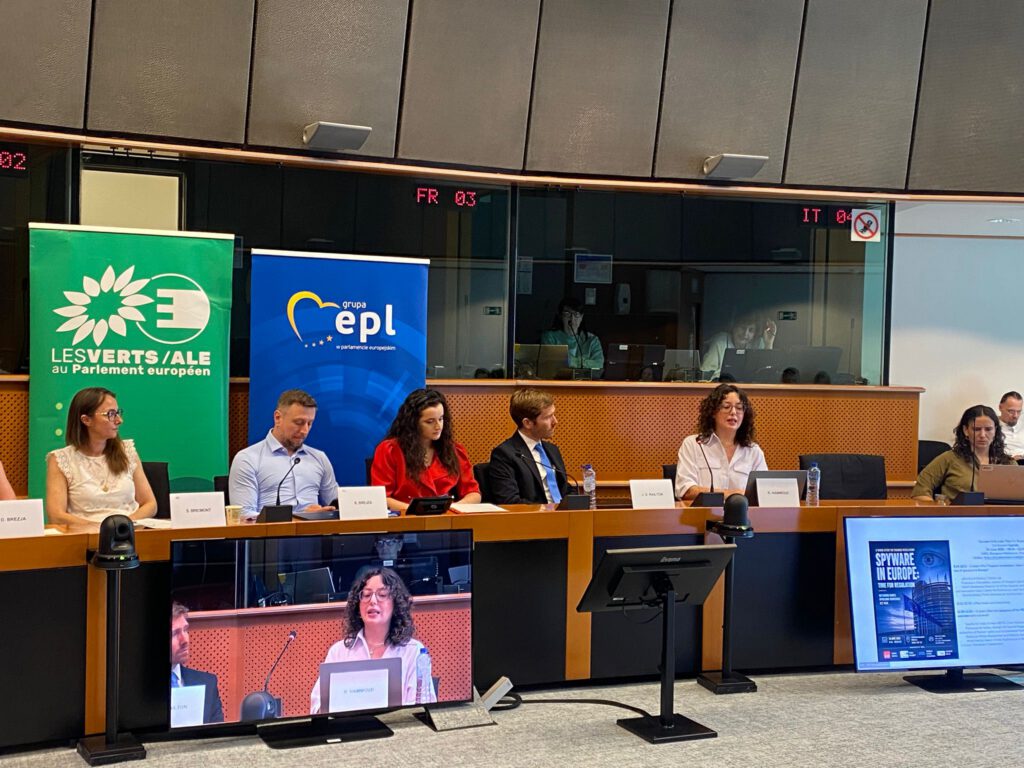
Five years after the Pegasus revelations, spyware accountability remains firmly on the EU’s political agenda. At a high-level event in the European Parliament marking the anniversary and three years since the EP’s PEGA committee concluded its work, our Security and Surveillance director Rand Hammoud stressed the need to move from recommendations to implementation, calling for stronger safeguards on the use, procurement and export of commercial spyware, as well as effective oversight and meaningful remedies for victims. Days later, Citizen Lab revealed that a former MEP who served on the PEGA committee had himself been targeted with Pegasus, reinforcing concerns about the integrity of democratic oversight. CDT Europe led on a joint statement signed by over 40 organisations and experts calling for an independent investigation and renewed political momentum to implement the recommendations of the PEGA committee. The issue was subsequently debated during the EP’s final plenary before the summer recess, where MEPs joined calls for an independent investigation into the targeting of Mr. Kouloglou.
Controversial Vote Revives “Chat Control 1.0”
On 9 July, the European Parliament voted to revive the interim derogation from the ePrivacy Directive, known as “Chat Control 1.0” (Regulation (EU) 2021/1232), which allows platforms to voluntarily and indiscriminately scan private communications for Child Sexual Abuse Material and grooming attempts. The vote came via a fast-tracked urgency procedure requiring an absolute majority to reject the text, virtually the same one Parliament had already rejected in March. This was a move pushed by European Parliament President Metsola and criticised by diplomats, experts, and media as unprecedented and an overstepping of Parliament’s mandate. Although a simple majority did vote against the text, both initially and in its amended form, the absolute majority threshold was missed, partly due to lower attendance ahead of the summer recess, allowing the Council’s text to pass. On a positive note, two amendments secured protections for end-to-end encryption. The revival comes just a week after trilogues ended on the CSA Regulation, the intended permanent framework for CSAM detection, without agreement. There is real concern that reviving the interim derogation now undermines that longer-term, more carefully negotiated process. CDT Europe opposed this vote and the procedural path taken to secure it.
Recommended read: The UN Special Rapporteur on the Rights to Freedom of Peaceful Assembly and of Association, Gina Romero, Digital surveillance related chilling effects must be addressed before long-term societal damage becomes irreversible.
💬 Online Expression & Civic Space
A Rights-Based Approach to Child Online Safety
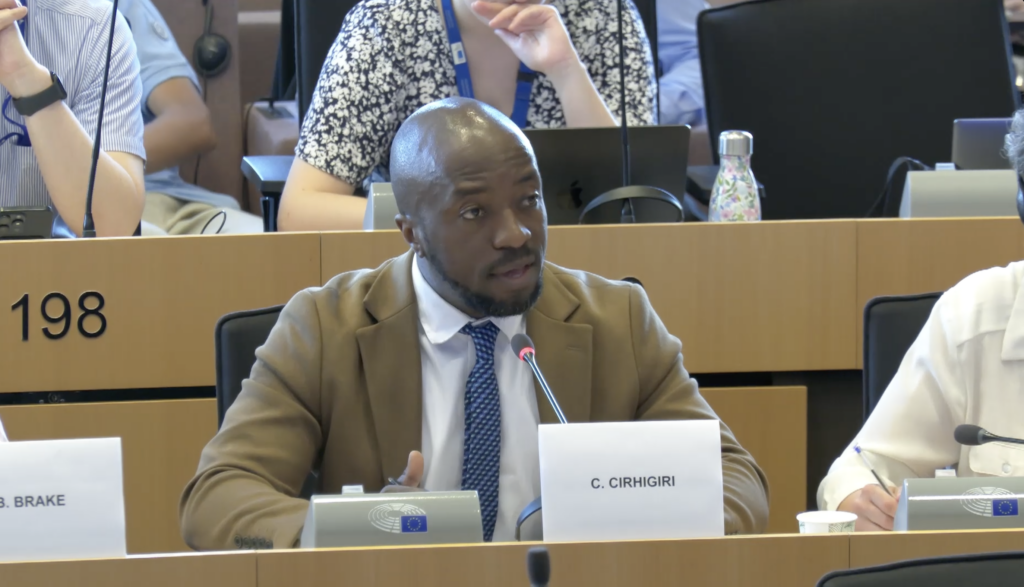
As the debate around protection of minors online continues attracting important political and public interest, CDT Europe was invited to speak on the topic during a public hearing organised by the European Parliament Internal Market and Consumer Protection (IMCO)’s Committee. Our Director of Online Expression and Civic Space Christian Cirhigiri reiterated the importance of enforcing the DSA, Article 28 guidelines, and the risk mitigation framework. He also stressed our concern with mandatory age verification and the risks it pauses on fundamental human rights, particularly for privacy and freedom of expression. Lastly, he emphasised the need for meaningful democratic participation of children and minors as their voices are still largely missing in ongoing EU policy development on child online safety.
Mapping Equality in Europe’s Digital Age
CDT Europe has recently released two papers on issues connected to equality and tech-facilitated gender-based violence (TFGBV). The first one, ““A Union of Equality” – An Analysis of the European Commission’s New Strategies in the Digital Age”, is a response to the Equality Strategies put forward by the Commission, with a focus on the specific objectives set out to address gender-based cyber-violence as well as online hatred against racial and ethnically minoritised persons and the LGBTIQ+ community. The second one, “Silenced by Design: Gendered Disinformation and its Threat to Democracy”, looks at the phenomenon of online gendered disinformation against women and gender-diverse people in public life, analysing the current legal framework and future avenues to address the issue at the EU level, while preserving the right to freedom of expression.
Recommended read: European Commission, Child safety online: Protecting and Empowering Minors in a Digital World – Report by the Co-Chairs of the Special Panel on Child Safety Online
⚖️ Equity and Data
Breaking Down the Final AI Omnibus
Following the adoption by the European Parliament and Council of the AI Omnibus, we published our analysis of the final text. We lay out that the most problematic changes are the postponement of the AI Act’s high-risk rules or the restriction of the AI Act’s applicability to products regulated by sectoral legislation. On a more positive note, we welcome the reversal of consequential changes proposed by the European Commission related to transparency and AI literacy. In addition to our earlier analysis of the new prohibited practice of generating non-consensual intimate imagery or child sexual abuse material, we scrutinise some additional wording added in the final version of the text.
Fight for Us, Not for Them Summit
CDT Europe held the “Fight for Us, Not for Them” Summit which we co-organised alongside several public interest organisations, including Article 19, BEUC, Civil Liberties Union for Europe, and EDRi. Set against the backdrop of various legislative proposals threatening to roll back fundamental rights safeguards in the digital space, the Summit set out to outline a positive vision for EU tech policy, unveiling a blueprint with twelve calls to action for a flourishing and just digital Europe. Programme Director Laura Lázaro Cabrera delivered the closing remarks for the Summit, emphasising the importance for EU policymakers to place the public interest at the forefront of tech policy and legislation, and the need for the EU response to tech challenges to be grounded in trust and autonomy.

Photo by Omar Havana. All Rights Are Reserved.
Recommended read: Tech Policy Press, Is Europe Getting AI Wrong?
📢 Have your say on our newsletters!
Our monthly newsletters— the EU Tech Policy Brief you’re reading now and the AI Bulletin —are designed to keep our community informed about our work and the latest developments in EU tech policy. We’re currently refreshing both newsletters to ensure they continue to meet your needs, and we’d greatly appreciate your feedback. Please take a few minutes to complete our short survey and help us improve the quality and relevance of our newsletters. The information you provide will be collected and stored anonymously for the sole purpose of this survey and the subsequent analysis of the results. If you have any questions or concerns about the survey, please contact us at eupress@cdt.org.
🗞️📻 In the Press
- EUPerspectives, Q&A: Lawmakers extended Chat Control. Here’s what it means