CDT Joins 120+ Others in Urging United Nations to Include Human Rights Safeguards in Proposed UN Cybercrime Treaty
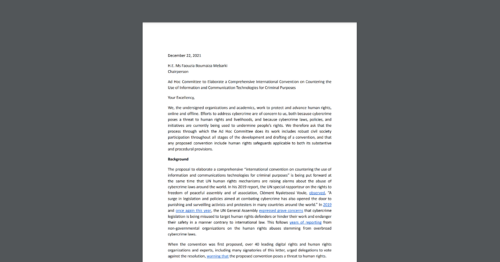
Today, CDT joined over 125 other human rights organizations and experts on a letter demanding that the United Nations committee that is drafting a new cybercrime treaty include human rights standards in the treaty and human rights advocates at all stages of its work.
Some countries that called for the new treaty regard Internet-enabled dissent as a cybercrime, raising profound concerns about the direction the treaty will take. The first meeting of the committee is on January 17.
British Public Oppose Secret Surveillance Powers and Want Strong Protections for Encrypted Communications
CDT released nationally representative polling data revealing that a the British public are broadly concerned about the security, privacy, and free speech consequences of allowing law enforcement to access encrypted communications.
As Brussels starts emptying for the summer, the risks of frontier AI models continue to capture the attention of policymakers as a key chapter of the AI Act becomes enforceable, and disclosure rules around the use of AI systems and AI-generated content are further clarified.
CDT Europe’s Feedback on the Draft Guidelines for the Classification of High-Risk AI Systems under the AI Act
CDT Europe responded to the European Commission’s consultation on the draft guidelines for the classification of high-risk artificial intelligence systems.
Responding to the EU-US Negotiations on Reciprocal Data Exchanges for Border Procedures
CDT Europe, together with 29 other civil society organisations and academics, sent an open joint letter to the Council of the EU regarding the worrying direction taken by the European Commission in the EU-US border negotiations with the U.S. government.