New Hampshire joins eight other states that have restricted warrantless access to electronic device location data
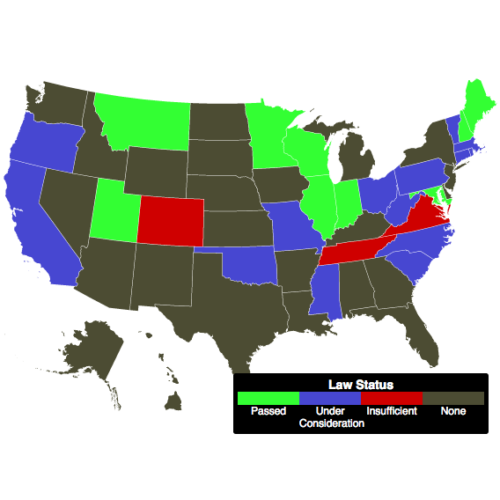
New Hampshire on Monday became the ninth state to enact legislation reigning in warrantless law enforcement access to location records generated by cell phones and other electronic devices, joining Indiana, Illinois, Maine, Maryland, Minnesota, Montana, Wisconsin, and Utah.
Location records show where you are and have been, based on communications between your mobile device and the nearest cellular tower, and other electronic location tracking techniques such as GPS. The New Hampshire legislation prohibits the government from obtaining “location information from an electronic device without a warrant issued by a judge based on probable cause and on a case-by-case basis.” Officials who violate the terms of the act will be subject to criminal penalties.
An individual’s current and past whereabouts are some of the most sensitive – and telling – data points collected by commonly used electronic devices today. The data can identify an individual’s schedule, preferences, and associates. It is highly personal, because everywhere you go, your cell phone goes as well. And now that more than 90 percent of American adults own a cell phone, the government can monitor the majority of Americans without much cost or effort, so strong legal protection is necessary. Given the wealth of sensitive information available and the potential for misuse, we think government access to location records ought to be overseen by a judge who makes an individualized determination of probable cause before law enforcement can gain access to the records.
Legislative Fixes
Currently, federal law does not require law enforcement or government officials to obtain a warrant prior to accessing individual location records. The New Hampshire law and the other state laws cannot bind the FBI and other federal law enforcement officials due to preemption. Rep. Chaffetz (R-UT) and Sen. Wyden (D-OR) have introduced the GPS Act (H.R. 491, S. 237), legislation that would provide uniformity and extend location privacy protection nationwide, binding both state and federal law enforcement.
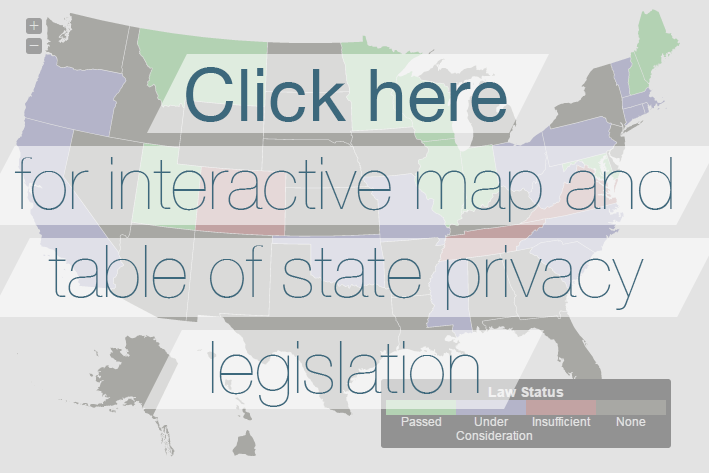
In the states, we’re tracking 15 bills: 14 full location privacy laws that cover current and past location information, and 1 real-time location privacy law, protecting the privacy of an individual’s current or real-time location, but not records about their location in the past. CDT has developed a comprehensive map and table detailing these ongoing legislative efforts to enhance location privacy rights.
CDT-led Coalition Calls for Transparency for White House AI Framework
CDT and Americans for Responsible Innovation led a broad, bipartisan coalition of over two dozen civil society groups in calling on the White House to release its Framework for review of frontier AI models.
CDT Amicus Brief Calls on Fourth Circuit to Rein In Geofence Warrants
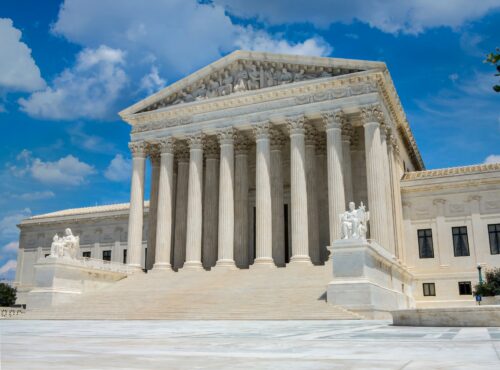
Earlier this year the Supreme Court ruled in Chatrie v United States that the Fourth Amendment protected all cell phone location information, which CDT lauded as a landmark decision, but sent the case back down to the Fourth Circuit to assess the propriety of the geofence warrant at issue.
CDT and Partners Post Floor Alert Opposing CA SB 1013 Automated License Plate Readers Bill
The best way to ensure that Automated License Plate Readers are not abused is to limit the retention of stored data and to keep loopholes to lawful process closed. CA SB 1013 is a step in the wrong direction, and we urge the California legislature to reject this approach.
British Public Oppose Secret Surveillance Powers and Want Strong Protections for Encrypted Communications
CDT released nationally representative polling data revealing that a the British public are broadly concerned about the security, privacy, and free speech consequences of allowing law enforcement to access encrypted communications.