How many applications do you have on your phone? Average people have around 80. For each of those applications, you gave the company behind it your consent to use your data, and likely in a variety of ways. It’s nearly impossible to remember what personal data use you consented to for each one. So what if each of those companies shares your data with three other companies? It’s easy to quickly lose control over your data — and it’s time for a change.
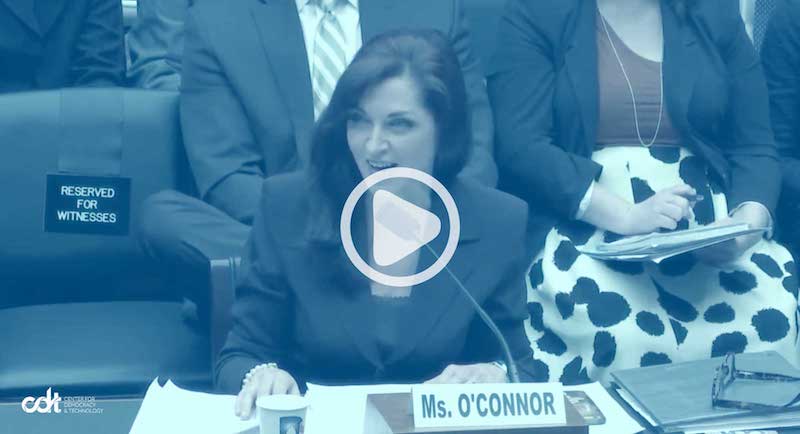
Earlier this week, CDT President & CEO Nuala O’Connor testified before the U.S. House Subcommittee on Consumer Protection and Commerce at its hearing on “Protecting Consumer Privacy in the Era of Big Data.” She began with a simple message: “Notice and choice are no longer a choice.” The current system around personal data provides no genuine choice, and is no longer a viable option. It’s time to move beyond check boxes and define our digital rights.
Watch Nuala’s illustrative opening statement for more on why we must move beyond the “notice and choice” model for personal privacy protections.
CDT and Partners Urge Passage of the California Location Privacy Act of 2025 (AB 322)
Location data is particularly sensitive, and when collected across time it can reveal a broad range of intrusive insights such as medical conditions, sexual orientation, political activities, and religious beliefs.
CDT and Allies Urge FCC Not to Violate Privacy of Cell Phone Buyers
CDT and EPIC led a coalition of 15 organizations in urging the FCC not to require phone companies to collect government IDs, physical addresses, and alternate phone numbers from every phone subscriber in the country.
As Brussels starts emptying for the summer, the risks of frontier AI models continue to capture the attention of policymakers as a key chapter of the AI Act becomes enforceable, and disclosure rules around the use of AI systems and AI-generated content are further clarified.