Awaiting the Rushed Cyber Bill’s Final Language: What We Hope to See
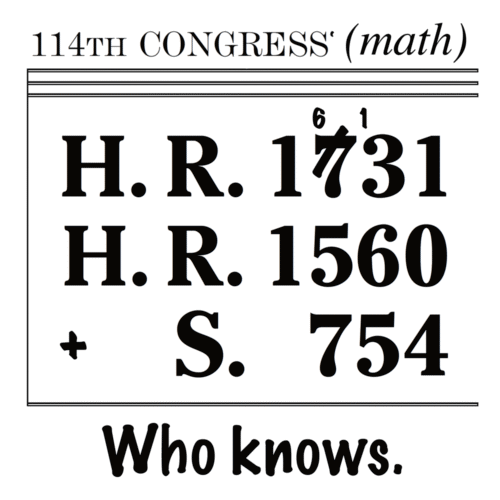
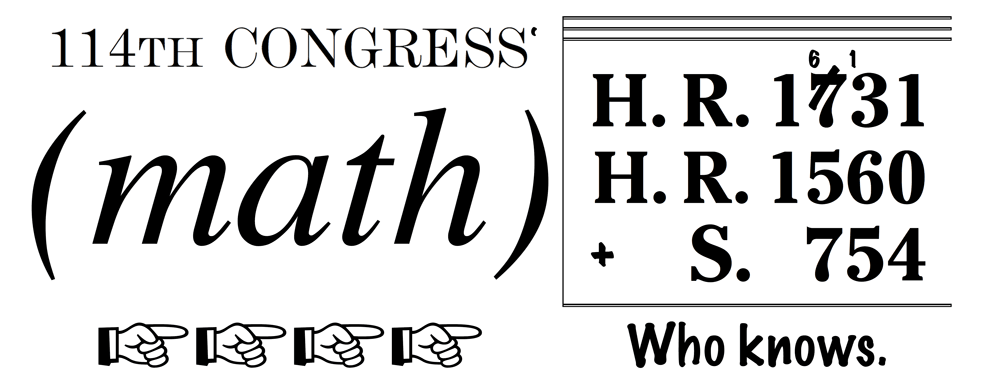
The final text of a cyber information sharing bill is expected to be released any minute now. The final bill will combine aspects of the Senate’s Cybersecurity Information Sharing Act (CISA-S.754), the House Intelligence Committee’s Protecting Cyber Networks Act (PCNA-H.R. 1560) and the House Homeland Security Committee’s National Cybersecurity Protection Advancement Act (NCPAA-H.R. 1731). According to recent reports, lawmakers hope to wrap up official conference negotiations (which have not yet begun) sometime this week, and expect to send the final bill to the President’s desk as part of an omnibus budget deal by the end of this year. The Center for Democracy & Technology is disappointed by the unnecessarily rushed, secretive process lawmakers turned to in order to reconcile the three bills. We hope that, in their haste, lawmakers managed to include crucial privacy protective measures in their final conference report.
According to publicly available information, instead of combining the three bills in an open, transparent manner, the Senate and House Intelligence Committees have been working together unofficially and created proposed final text as of last Friday, which they handed off to the House Homeland Security Committee for approval. Apparently Homeland Security staff pushed back because the bill lacked many of the NCPAA’s privacy protections, but Committee Chairman Michael McCaul (R-Texas) may be facing increasing pressure from House leadership to accept the deal and work to move a final version forward as quickly as possible.
Given the bill’s dubious cybersecurity value, we are confused by the sudden sense of urgency to pass the cyber information sharing bill, without carefully (and publicly) considering the various strengths and weaknesses of the three options. Regardless, when the final conference report is released, CDT hopes that it contains the following protective measures:
1. Establishing DHS as the Central Hub for Info Sharing: Unlike the Senate’s CISA and the House Intelligence Committee’s PCNA, the House Homeland Security’s NCPAA only permits companies to share information with the Department of Homeland Security. CDT supports this approach, because DHS is in the best position to scrub out sensitive personal information before that information is distributed to other federal agencies that are primarily focused on surveillance, not cybersecurity.
2. Limiting Dissemination, Retention, and Usage of Shared Info to Cyber Purposes Only: NCPAA is the only bill out of the three that limits the dissemination, retention, and usage of shared information to cybersecurity purposes. CDT hopes this commonsense restriction is in the final conference report, because it will ensure that the cyber information sharing program will be dedicated to its rightful purpose: cybersecurity, not backdoor surveillance.
3. Duty to Remove PII: The PCNA’s definition is the best out of the three: it requires entities to remove personally identifiable information (PII) before sharing cyber threat indicators (CTIs) upon “reasonable belief: that it is not “directly related” to a cybersecurity threat. Although an amendment from Senator Ron Wyden (D-Oregon) would have strengthened this privacy protection even further, this definition is currently the best option out there.
4. Strong Limitations on Countermeasures: CDT is concerned that each of the three bills fails to sufficiently prohibit countermeasures with negative external effects, which could potentially lead to a myriad of reckless activities detrimental to computer security. However, of the three bills, the Senate’s CISA contains the least destructive countermeasures language because it prohibits countermeasures that provide unauthorized access to data on another network.
CDT will provide its analysis of the final conference report once it is released. Stay tuned.
CDT-led Coalition Calls for Transparency for White House AI Framework
CDT and Americans for Responsible Innovation led a broad, bipartisan coalition of over two dozen civil society groups in calling on the White House to release its Framework for review of frontier AI models.
CDT Amicus Brief Calls on Fourth Circuit to Rein In Geofence Warrants
Earlier this year the Supreme Court ruled in Chatrie v United States that the Fourth Amendment protected all cell phone location information, which CDT lauded as a landmark decision, but sent the case back down to the Fourth Circuit to assess the propriety of the geofence warrant at issue.
CDT and Partners Post Floor Alert Opposing CA SB 1013 Automated License Plate Readers Bill
The best way to ensure that Automated License Plate Readers are not abused is to limit the retention of stored data and to keep loopholes to lawful process closed. CA SB 1013 is a step in the wrong direction, and we urge the California legislature to reject this approach.
British Public Oppose Secret Surveillance Powers and Want Strong Protections for Encrypted Communications
CDT released nationally representative polling data revealing that a the British public are broadly concerned about the security, privacy, and free speech consequences of allowing law enforcement to access encrypted communications.